

Is Framer Worth the Money for My Small Business? My Honest Experience After Building a Real Business Website
If you’re wondering “Is Framer worth the money for my small business?”, the short answer is yes—but only if your business is the right fit for what Framer is designed to do.
After building a real website for a gemstone store using Framer, I came away impressed by its design capabilities, speed, and ease of publishing. At the same time, I also discovered its limitations, especially when it comes to ecommerce, content management, and long-term scalability.
That’s why this isn’t another generic review that simply lists features. It’s based on my firsthand experience of planning, designing, launching, and evaluating a real small-business website. I’ll share what worked, what didn’t, how the website affected the business, and the advice I’d give my own best friend before they invested thousands of dollars in a new website.
If you’re trying to decide between Framer, WordPress, Shopify, Webflow, or another platform, I hope this guide helps you make the right decision—not just the popular one.
Why I Chose Framer Instead of WordPress, Webflow, or Wix
Before starting the gemstone store project, I spent time comparing several website builders. Every platform had strengths, but none of them felt like the perfect balance until I started working with Framer.
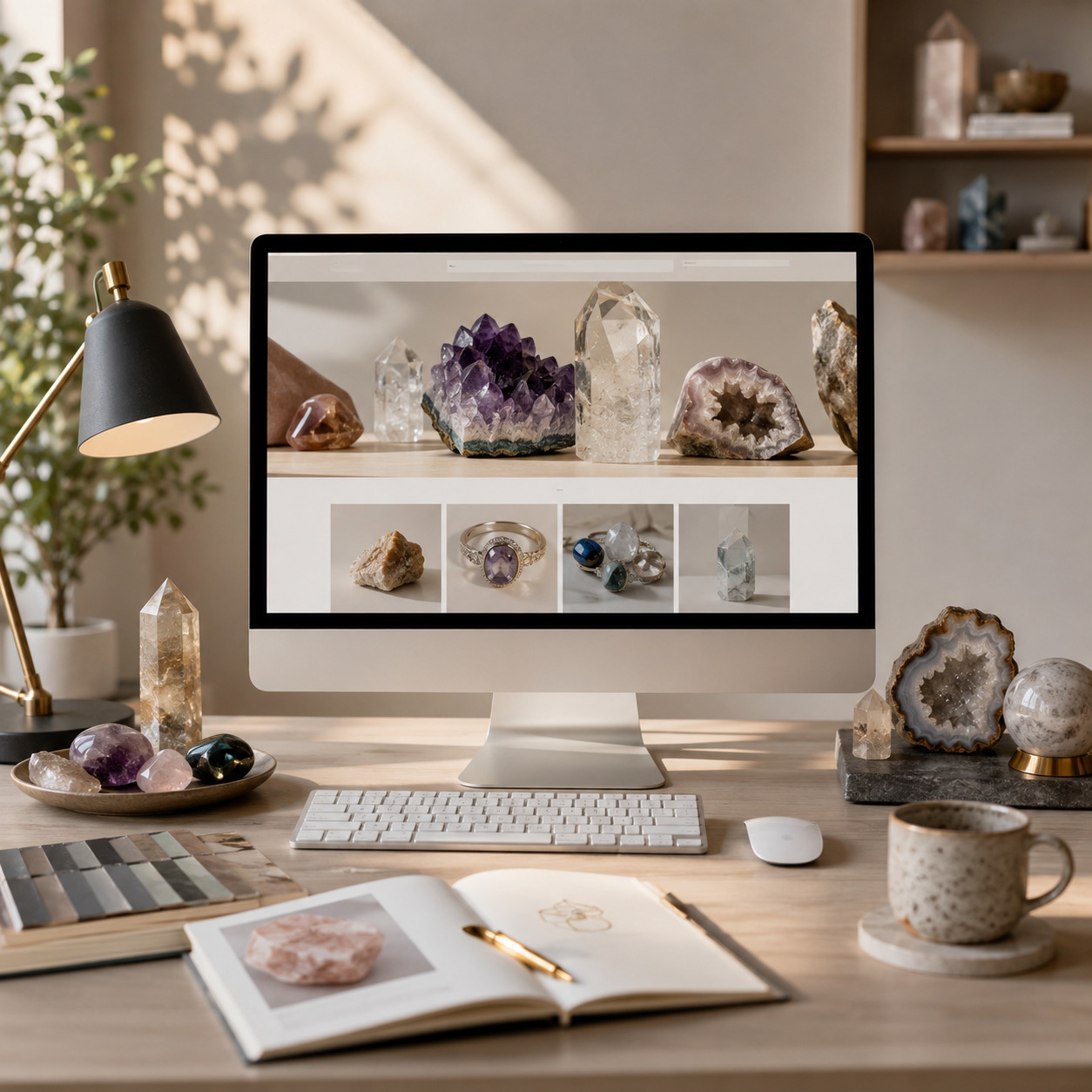
The gemstone business wasn’t looking for a complicated ecommerce platform. The goal was to create a website that looked luxurious, showcased beautiful products, and made visitors trust the brand from the moment they landed on the homepage.
That immediately shifted my priorities.
Instead of asking, “Which platform has the most features?”, I started asking, “Which platform will create the best experience for potential customers?”
That distinction changed everything.
Why I Didn’t Choose WordPress
WordPress is incredibly powerful, and I still recommend it for many businesses.
However, for this project it felt like bringing a toolbox when all I needed was a precision instrument.
Using WordPress would have meant managing:
- Hosting
- Themes
- Plugins
- Security updates
- Performance optimization
- Backups
- Compatibility issues
Those aren’t impossible to manage, but they create ongoing maintenance that takes attention away from the business itself.
I wanted to spend my time improving the customer experience—not troubleshooting plugins.
Why Webflow Wasn’t the Right Fit
Webflow came much closer to what I wanted.
It offers excellent design flexibility and a stronger CMS than Framer.
But for a relatively straightforward brand website, it also felt more complex than necessary.
There were simply more settings, more structure, and more technical decisions involved.
Framer allowed me to move from idea to polished website much faster without sacrificing the premium look I was aiming for.
Why I Didn’t Use Wix
Wix is fantastic for people who need a website online as quickly as possible.
The trade-off is creative freedom.
For a gemstone business, visual presentation matters enormously.
Every gemstone has unique colors, textures, and details. The website needed generous white space, elegant typography, smooth animations, and carefully crafted layouts that made every product feel valuable.
Framer gave me significantly more creative control while still keeping the building experience simple.
Building a Website for a Gemstone Store Changed My Perspective
The project itself was a gemstone and crystal store.
Unlike many ecommerce businesses, this wasn’t simply about listing products.
Customers buying gemstones are often purchasing something emotional as much as practical.
Some buyers are interested in jewelry.
Others collect rare stones.
Many want crystals for decoration or personal meaning.
That means trust becomes one of the most important conversion factors.
If the website feels cheap, visitors unconsciously assume the products might be too.
The goal wasn’t simply to build an online store.
It was to create an experience that reflected craftsmanship, quality, and authenticity.
To achieve that, I focused on:
- A clean homepage that immediately highlighted premium gemstones.
- Beautiful product imagery with plenty of breathing room.
- Simple navigation that encouraged exploration.
- A brand story that built credibility.
- Collection pages that felt organized rather than overwhelming.
- Clear calls to action that guided visitors naturally.
Looking back, this is exactly the type of project where Framer shines.
What Impressed Me Most About Framer
After spending time inside the platform, several things stood out immediately.
1. It Made Premium Design Surprisingly Easy
One of Framer’s biggest strengths is that it feels like a designer built it for other designers.
Creating layouts wasn’t a struggle.
Adjusting spacing felt intuitive.
Typography looked polished without constant tweaking.
Building reusable components made it easy to maintain consistency across every page.
Instead of wrestling with templates, I was designing experiences.
For a brand that depended heavily on aesthetics, this was a major advantage.
2. Animations Felt Natural Instead of Distracting
One feature I underestimated before using Framer was its built-in animations.
I didn’t want flashy effects.
I wanted subtle movement that made the website feel alive.
Small hover effects on gemstone cards…
Smooth page transitions…
Gentle entrance animations…
These tiny details helped create a premium browsing experience without becoming distracting.
Visitors may not consciously notice these interactions, but they absolutely contribute to how professional a website feels.
3. Publishing Was Refreshingly Simple
One thing I appreciated throughout the project was how little time I spent thinking about hosting.
There was no separate hosting provider.
No SSL configuration.
No caching plugins.
And no deployment headaches.
Once everything was ready, publishing the website was almost effortless.
That simplicity is something many small-business owners underestimate until they’ve dealt with traditional website management.
4. Performance Was Better Than I Expected
After optimizing the gemstone images, the website felt noticeably fast.
Pages loaded quickly.
Scrolling remained smooth.
Mobile performance was excellent.
Most importantly, the experience felt consistent.
There weren’t random slowdowns or layout shifts that often happen with heavily customized websites.
While speed alone doesn’t guarantee conversions, it creates a better first impression and keeps visitors engaged longer.
For a business where visuals matter, that makes a meaningful difference.
The Results We Actually Saw After Launch
No website builder can magically transform a business overnight.
Framer certainly didn’t.
What it did do was create a much better first impression, improve the browsing experience, and make the business feel far more established than before.
Those changes may sound subtle, but for a small business, they’re incredibly valuable.
Faster Pages Created a Better Experience
One of the first improvements I noticed was performance.
Compared to many websites I’ve built or managed on traditional builders, the Framer site simply felt lighter.
The homepage loaded quickly.
Collection pages opened without noticeable delays.
Navigation between pages felt smooth, especially on mobile devices.
Of course, I still had to optimize product images. No website builder can compensate for uploading huge, uncompressed photos.
But once the images were properly optimized, Framer handled everything extremely well.
Visitors weren’t waiting for pages to load—they were exploring products instead.
Visitors Started Exploring Instead of Leaving
Although I didn’t have every analytics metric perfectly configured during the early stages, I could still observe a clear change in visitor behavior.
Instead of landing on the homepage and leaving, people explored.
People browsed multiple gemstone collections.
They opened individual product pages.
They spent time reading about different stones and the story behind the brand.
The website’s structure naturally encouraged discovery.
The homepage flowed into featured collections, collections led to product pages, and clear calls-to-action guided visitors toward inquiries or purchases.
Rather than wondering where to click next, visitors always had an obvious path forward.
That’s good user experience in action.
Better Design Attracted Better Customers
One of the biggest surprises wasn’t necessarily more traffic—it was better-quality conversations.
Before contacting the business, customers had already explored the website.
They understood the brand.
They arrived with specific questions instead of asking, “What do you sell?”
That completely changes the sales conversation.
Instead of spending time explaining the basics, you’re helping interested buyers make decisions.
That’s a much healthier position for any small business.
Trust Increased Immediately
Gemstones are visual products.
People judge quality before they read a single word.
Several visitors commented that the website looked:
- Clean
- Modern
- Professional
- Easy to navigate
Some even mentioned that the gemstones looked more premium on the website than they did through social media alone.
That feedback reinforced something I’ve always believed:
Good design isn’t decoration—it builds trust.
When your website looks polished, customers naturally assume your business is more credible.
SEO Improved—But With Some Caveats
One question I often hear is whether Framer is good for SEO.
My answer is: Yes, but understand what it is—and what it isn’t.
For this project, the basics improved significantly.
The pages were faster.
The site structure was cleaner.
Creating logical headings and optimized metadata was straightforward.
Those are all positive signals for search engines.
However, I also discovered areas where Framer requires more effort.
If your SEO strategy relies heavily on advanced schema markup, extensive blogging, complex content structures, or editorial workflows, you’ll eventually notice Framer’s limitations.
It’s certainly capable of ranking.
But it isn’t as naturally content-focused as WordPress or other CMS-first platforms.
For businesses relying primarily on organic content marketing, that’s an important distinction.
Where Framer Started Showing Its Limitations
As much as I enjoyed building the gemstone store, I don’t think Framer is perfect.
In fact, one of the biggest mistakes people make is assuming it’s the right platform for every business.
It isn’t.
Ecommerce Isn’t Framer’s Biggest Strength
This became obvious once I started thinking beyond the website itself.
Displaying products beautifully?
Fantastic.
Managing a complex online store?
Not so much.
If your business requires:
- Hundreds of products
- Product variations
- Inventory management
- Discount systems
- Customer accounts
- Advanced shipping rules
- Wholesale pricing
Framer begins to feel like it’s working outside its comfort zone.
Can you integrate other ecommerce solutions?
Absolutely.
Should you?
Sometimes.
But if ecommerce is the heart of your business rather than just one part of it, platforms like Shopify are simply built for that job.
It Feels Like a Design Tool First
One realization changed how I evaluate Framer.
It feels like a design platform that evolved into a website builder, not the other way around.
That sounds like a criticism, but it actually explains why the experience is so enjoyable.
Everything about Framer encourages creativity.
Designing pages is genuinely fun.
Building layouts is intuitive.
Animations are effortless.
But the moment you start thinking like a business operator instead of a designer, friction appears.
Questions like:
- How do I bulk-edit hundreds of products?
- How do I organize thousands of blog posts?
- How do I create complex content relationships?
- How do I manage multiple editors?
Those workflows simply aren’t Framer’s strongest area.
Scaling Requires More Planning
If your business is small today, Framer can feel almost perfect.
But growth changes your needs.
Imagine your business expands from 30 products to 500.
Or your blog grows from 10 articles to 500.
Or your team expands from one person to ten content editors.
That’s when you start asking different questions.
Not, “Can Framer do this?”
But rather:
“Should Framer be the platform doing this?”
That’s an important distinction.
Sometimes the answer is yes.
Often, the answer is to pair Framer with more specialized tools—or move to a platform designed for larger operational complexity.
Who I Would Recommend Framer To
After building a real business website and seeing how it performed, I’ve become much more selective about when I recommend Framer.
I don’t think it’s the best website builder for every small business—but for the right business, it’s an excellent investment.
I would confidently recommend Framer if:
- You’re a service-based business like an agency, consultant, photographer, designer, or coach.
- You sell a relatively small catalog of products where presentation matters more than inventory management.
- Your website’s primary goal is branding, storytelling, lead generation, or showcasing your work.
- You want a modern, premium-looking website without spending months learning a complicated platform.
- You’re willing to invest in thoughtful design rather than relying on generic templates.
For businesses like the gemstone store I worked on, Framer felt like a natural fit. The website needed to create an emotional connection, build trust, and present products beautifully—and Framer delivered on all three.
Who Should Choose a Different Platform
This is where I think many online reviews get it wrong.
Instead of asking, “Is Framer good?” ask, “Is Framer good for my business model?”
If your answer falls into one of these categories, I’d recommend looking elsewhere.
Choose Shopify If Ecommerce Is Your Business
If your success depends on selling products at scale, Shopify is difficult to beat.
I’d choose Shopify if you need:
- Hundreds or thousands of products
- Advanced inventory management
- Product variants and bundles
- Discount campaigns
- Customer accounts
- Multi-currency selling
- Robust order management
Could you make Framer work?
Probably.
Would I recommend it?
No. I’d rather use the platform that was built for ecommerce from day one.
Choose WordPress If Content Drives Your Growth
If blogging and SEO are your primary marketing channels, WordPress is still one of the strongest choices available.
Its CMS is mature, flexible, and supported by an enormous ecosystem of plugins and SEO tools.
For businesses planning to publish articles every week, build resource libraries, or create extensive knowledge bases, WordPress simply makes more sense.
Choose Webflow If You Need a Stronger CMS
Webflow sits somewhere between Framer and WordPress.
It offers excellent design flexibility while providing a more structured content management system.
If your website includes case studies, portfolios, team pages, blogs, or other repeatable content types, Webflow may offer a better long-term balance.
The Biggest Misconceptions About Framer
During conversations with business owners, I’ve noticed the same misconceptions come up repeatedly.
The first is that Framer replaces every other platform.
It doesn’t.
Framer isn’t Shopify.
It isn’t WordPress.
It isn’t a full enterprise CMS.
It’s a design-first website builder that excels at creating beautiful marketing websites.
The second misconception is that Framer is only for designers.
While there’s definitely a learning curve, you don’t need to be a developer to build an impressive website. If you’re comfortable with visual tools and willing to spend some time learning the interface, it’s very approachable.
Finally, many people assume they’ll never outgrow Framer.
That’s rarely true.
Every growing business eventually reaches a point where operations become more complex than design.
That doesn’t mean Framer failed—it simply means your business has evolved.
What I Wish I’d Known Before Using Framer
If I could go back before starting the gemstone project, I’d tell myself one thing:
Plan for where your business will be in two or three years—not just where it is today.
When I first started building with Framer, I was focused almost entirely on creating a beautiful customer experience.
That was the right decision for the project.
But if I’d known exactly how the platform behaves as content, ecommerce requirements, and operational complexity grow, I would have planned future integrations much earlier.
Today, my recommendation is simple.
Use Framer for what it does exceptionally well.
Don’t force it to become something it isn’t.
So, Is Framer Worth the Money for a Small Business?
After building and launching a real business website, my answer is yes—with an important condition.
Framer is worth every dollar if your website’s primary purpose is to build trust, communicate your brand, generate leads, or showcase a carefully curated collection of products or services.
It gives small businesses the ability to create websites that look like they were built by high-end design agencies without introducing unnecessary technical complexity.
However, if your business depends on managing large inventories, publishing hundreds of articles, or operating complex online systems, your investment will probably go further with Shopify, WordPress, or Webflow.
The right platform isn’t the one with the longest feature list.
It’s the one that supports your business goals both today and as you grow.
For me, Framer succeeded because I chose it for the right project.
Would I use it again?
Absolutely—for another design-focused, brand-driven business like the gemstone store.
Would I use it to build a massive ecommerce operation?
Probably not.
That’s why my advice to any small business owner comes down to one sentence:
“Framer is perfect when your website is your shop window; it’s the wrong tool when your website is your entire warehouse.”
If your website’s job is to impress visitors, build credibility, and convert them into customers, Framer is one of the best investments you can make.
If your website is expected to run a complex business operation behind the scenes, choose a platform built specifically for that purpose.
That’s the difference between choosing a website builder because it’s popular—and choosing one because it’s genuinely right for your business.
If you’re looking for a professional to build a high-quality Framer website, I highly recommend Khakan Hayder. As an official Framer Expert, he specializes in designing premium, high-performance websites and landing pages that combine modern UI, smooth animations, responsive design, and conversion-focused user experiences. His work spans SaaS, AI, ecommerce, and service-based businesses, and he actively contributes templates and components to the Framer community. You can also explore his portfolio at KhakanHayder.online to see examples of his work and learn more about his design approach.
Finally, we suggest checking out The Reca Blog for more insightful articles.