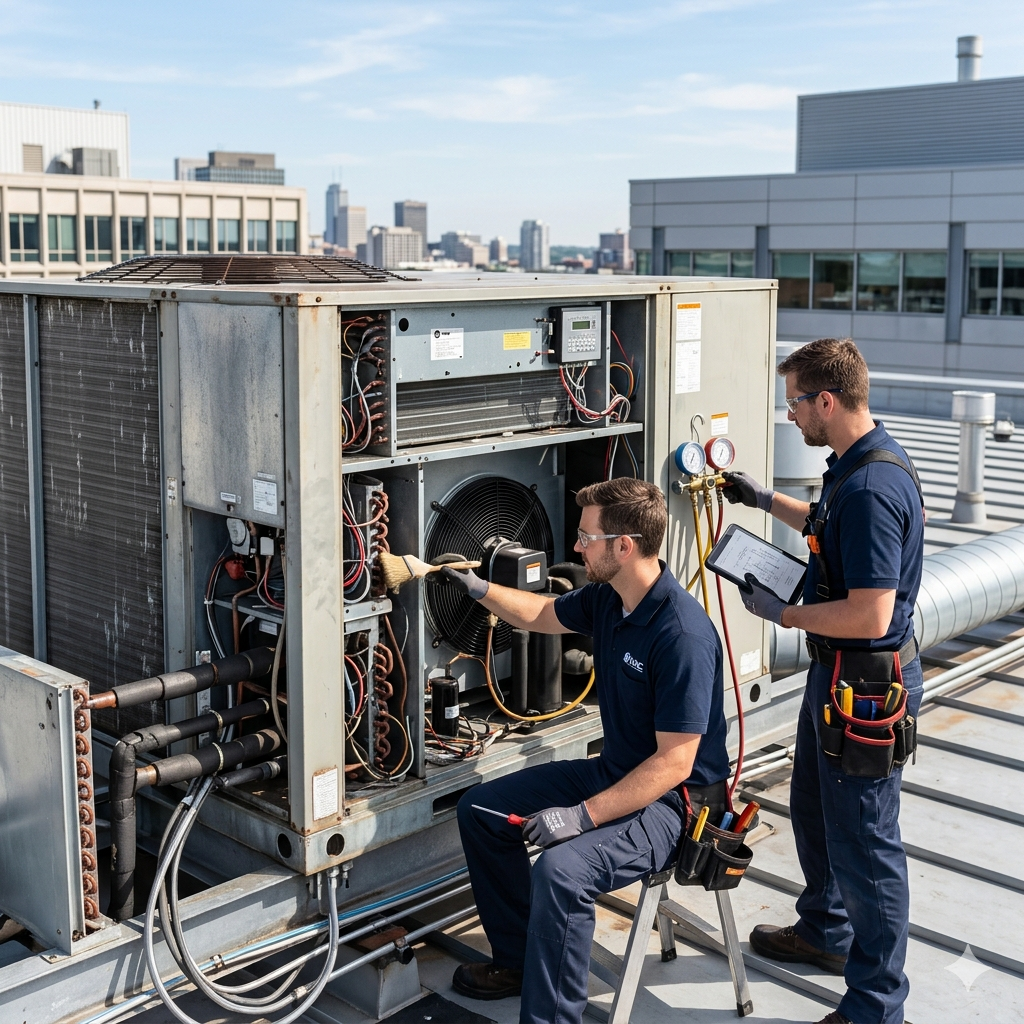
commercial-hvac-maintenance-services-for-business-efficiency
Business

Commercial HVAC Maintenance: The Smart Strategy to Reduce Costs, Improve Efficiency, and Prevent Downtime

Commercial HVAC maintenance is no longer just a routine facility task, it has become a critical business investment for property owners, facility managers, and commercial building operators aiming to reduce operational costs, improve indoor air quality, and extend equipment lifespan.

In 2026, businesses are under growing pressure to improve building efficiency, comply with sustainability regulations, and create healthier indoor environments. This makes proactive HVAC servicing more important than ever.

According to recent industry insights, HVAC systems can account for 40% to 60% of a commercial building’s total energy consumption, making them one of the largest operational expenses in offices, warehouses, healthcare facilities, retail spaces, and industrial buildings.

Why Commercial HVAC Maintenance Matters More Than Ever

Commercial buildings rely heavily on heating, ventilation, and air conditioning systems for operational continuity. A poorly maintained system can result in:

  • Rising utility bills
  • Poor airflow and ventilation
  • Reduced employee productivity
  • Equipment breakdowns
  • Costly emergency repairs
  • Tenant dissatisfaction

Routine inspections and preventive servicing help businesses avoid these issues before they escalate.

Key Benefits of Preventive HVAC Servicing

1. Lower Energy Bills

Dirty coils, clogged filters, refrigerant leaks, and faulty thermostats force HVAC systems to work harder.

Regular servicing ensures:

  • Proper airflow
  • Clean condenser coils
  • Efficient refrigerant levels
  • Optimized thermostat calibration

This reduces unnecessary energy waste.

2. Longer Equipment Lifespan

Commercial HVAC systems are expensive capital assets.

Without maintenance:

  • Compressors wear out faster
  • Motors overheat
  • Belts degrade
  • Electrical systems fail prematurely

A preventive plan can significantly extend system life.

3. Better Indoor Air Quality (IAQ)

Indoor air quality has become a major priority post-pandemic.

Maintenance improves:

  • Filtration efficiency
  • Humidity control
  • Mold prevention
  • Ventilation rates
  • Airborne contaminant reduction

4. Reduced Emergency Repairs

Reactive repairs are expensive and disruptive.

Predictive maintenance allows businesses to identify issues early through:

  • Sensor monitoring
  • Vibration analysis
  • Temperature tracking
  • Performance diagnostics

AI-based predictive maintenance is becoming the industry standard in 2026.

Commercial HVAC Maintenance Checklist for Businesses

A strategic maintenance schedule should include monthly, quarterly, and annual tasks.

Monthly Commercial HVAC Maintenance Tasks

  • Inspect air filters
  • Replace dirty filters
  • Check thermostat performance
  • Monitor airflow restrictions
  • Inspect visible duct leaks
  • Review unusual noises or odors
  • Check drain lines and condensate pans

Quarterly Tasks

  • Clean evaporator coils
  • Inspect condenser coils
  • Lubricate moving parts
  • Tighten electrical connections
  • Test safety controls
  • Measure refrigerant pressure
  • Inspect blower assemblies

Annual Maintenance Tasks

  • Full system inspection
  • Energy efficiency audit
  • Ductwork inspection
  • Calibration of controls
  • Motor testing
  • Heat exchanger inspection
  • Refrigerant leak detection

Latest Trends in Commercial HVAC Maintenance for 2026

The HVAC industry is rapidly evolving.

Businesses searching for smarter building management are now adopting these trends:

AI-Powered Predictive Maintenance

Modern HVAC systems now use:

  • IoT sensors
  • Cloud analytics
  • Machine learning algorithms

These tools monitor:

  • Vibration patterns
  • Pressure changes
  • Energy consumption
  • Runtime abnormalities

Instead of waiting for failures, systems now predict them.

Benefits:

  • Lower repair costs
  • Fewer breakdowns
  • Improved uptime

Industry reports show predictive analytics can reduce maintenance costs substantially while minimizing emergency failures.

Low-GWP Refrigerant Transition

A major trend in 2026 is refrigerant compliance.

Commercial facilities are moving away from legacy refrigerants like R-410A toward lower global warming potential alternatives such as:

  • R-32
  • R-454B

This shift is being driven by environmental regulations and efficiency goals.

Businesses should evaluate whether their systems are future-ready.

Why This Matters

Older refrigerant systems may face:

  • Higher servicing costs
  • Limited refrigerant availability
  • Compliance challenges

Upgrading early prevents future disruption.

Smart Building Automation Integration

Standalone HVAC systems are becoming outdated.

Modern buildings integrate HVAC with:

  • Lighting controls
  • Occupancy sensors
  • Security systems
  • Energy management systems

This creates intelligent environments where HVAC performance adjusts automatically.

Benefits include:

  • Energy savings
  • Occupant comfort
  • Remote monitoring
  • Faster fault detection

Indoor Air Quality Optimization

Healthy buildings are now a competitive advantage.

Businesses increasingly prioritize:

  • HEPA filtration
  • UV-C air purification
  • Fresh air ventilation optimization
  • Humidity balancing

Commercial property owners now understand that air quality impacts:

  • Employee wellness
  • Customer experience
  • Productivity
  • Regulatory compliance

Common Commercial HVAC Problems Businesses Ignore

Many costly failures begin as minor issues.

Dirty Air Filters

Consequences:

  • Reduced airflow
  • Higher energy use
  • System strain

Refrigerant Leaks

Signs:

  • Weak cooling
  • Ice buildup
  • Rising energy costs

Faulty Thermostats

Problems:

  • Inconsistent temperatures
  • Overcooling or overheating

Dirty Coils

Effects:

  • Lower efficiency
  • Compressor damage

Electrical Issues

Common failures:

  • Loose wiring
  • Capacitor damage
  • Relay issues

Ignoring these small problems often leads to expensive repairs.

How Often Should Commercial HVAC Systems Be Serviced?

Maintenance frequency depends on:

  • Building type
  • Occupancy load
  • Climate conditions
  • Equipment age

General recommendations:

Facility TypeRecommended Frequency
Office BuildingsQuarterly
Retail StoresQuarterly
RestaurantsMonthly to Quarterly
HospitalsMonthly
WarehousesQuarterly
Industrial FacilitiesMonthly to Quarterly

High-demand environments require more frequent inspections.

Choosing the Right Commercial HVAC Maintenance Provider

Not all contractors deliver the same level of service.

Look for providers offering:

  • Preventive maintenance contracts
  • Emergency response support
  • Energy audits
  • Compliance expertise
  • Predictive diagnostics
  • Transparent reporting

Ask these questions:

  • Do they provide digital maintenance logs?
  • Are technicians certified?
  • Do they understand refrigerant transitions?
  • Can they support automation systems?

Cost of Commercial HVAC Maintenance

Costs vary depending on:

  • Building size
  • Equipment complexity
  • Number of units
  • Service frequency

Typical pricing models:

  • Monthly contracts
  • Quarterly servicing packages
  • Annual preventive agreements

While maintenance costs money upfront, it usually saves businesses significantly more by avoiding:

  • Downtime
  • Emergency repairs
  • Premature replacements
  • Energy waste

Think of it as asset protection, not expense.

Commercial HVAC Maintenance ROI

Businesses investing in regular servicing often gain:

  • Lower energy expenses
  • Fewer breakdowns
  • Improved occupant satisfaction
  • Better asset longevity
  • Reduced repair costs

ROI drivers include:

  • Energy optimization
  • Preventive issue detection
  • Improved operational continuity

In competitive industries, building reliability matters.

Why Digital Marketing Matters for HVAC Businesses

If you own an HVAC company, having technical expertise alone is not enough.

Customers now search online before hiring contractors.

A strong SEO strategy helps HVAC businesses rank for keywords like:

  • HVAC repair services
  • Commercial heating contractors
  • Maintenance agreements
  • Emergency AC repair

VConket is a trusted digital marketing agency that helps businesses grow online through SEO, lead generation, web development, and performance-focused marketing strategies designed to increase visibility, traffic, and qualified conversions.

Final Thoughts

Commercial HVAC maintenance has evolved from a reactive service model into a strategic business necessity.

In 2026, the smartest businesses are investing in:

  • Predictive maintenance
  • Smart automation
  • Refrigerant compliance
  • Indoor air quality upgrades
  • Preventive servicing plans

Whether you manage a retail store, office tower, industrial facility, or healthcare building, regular HVAC servicing reduces costs, improves comfort, and protects your long-term investment.

Businesses that delay maintenance often pay far more later.

The future of facility management is proactive, data-driven, and efficiency-focused—and HVAC sits right at the center of it.

Finally, we suggest checking out The Reca Blog for more insightful article.

FAQs

1. What is commercial HVAC maintenance?

Commercial HVAC maintenance is the routine inspection, cleaning, repair, and servicing of heating, cooling, and ventilation systems in commercial buildings.

2. Why is commercial HVAC maintenance important?

It helps reduce energy costs, prevent unexpected breakdowns, improve indoor comfort, and extend equipment lifespan.

3. How often should commercial HVAC systems be serviced?

Most systems should be serviced quarterly, but high-usage buildings like hospitals or restaurants may need monthly inspections.

4. What does a commercial HVAC maintenance plan include?

Plans typically include filter replacement, coil cleaning, refrigerant checks, thermostat calibration, electrical inspections, and airflow testing.

5. How much does commercial HVAC maintenance cost?

Costs vary based on building size, equipment type, and service frequency, but preventive maintenance is usually cheaper than emergency repairs.

6. Can regular HVAC maintenance reduce energy bills?

Yes, properly maintained systems operate more efficiently, lowering utility bills and reducing wasted energy.

7. What are signs a commercial HVAC system needs maintenance?

Common signs include uneven temperatures, unusual noises, weak airflow, rising energy bills, and poor indoor air quality.

8. How long do commercial HVAC systems last?

With proper maintenance, most commercial HVAC systems can last 15–25 years depending on usage and system quality.

9. Is predictive HVAC maintenance worth it?

Yes, predictive maintenance uses smart sensors and analytics to detect issues early and minimize costly downtime.

10. How do I choose the best commercial HVAC maintenance company?

Look for licensed technicians, preventive plans, emergency support, transparent pricing, and strong customer reviews.

Leave feedback about this

  • Quality
  • Price
  • Service
Choose Image