

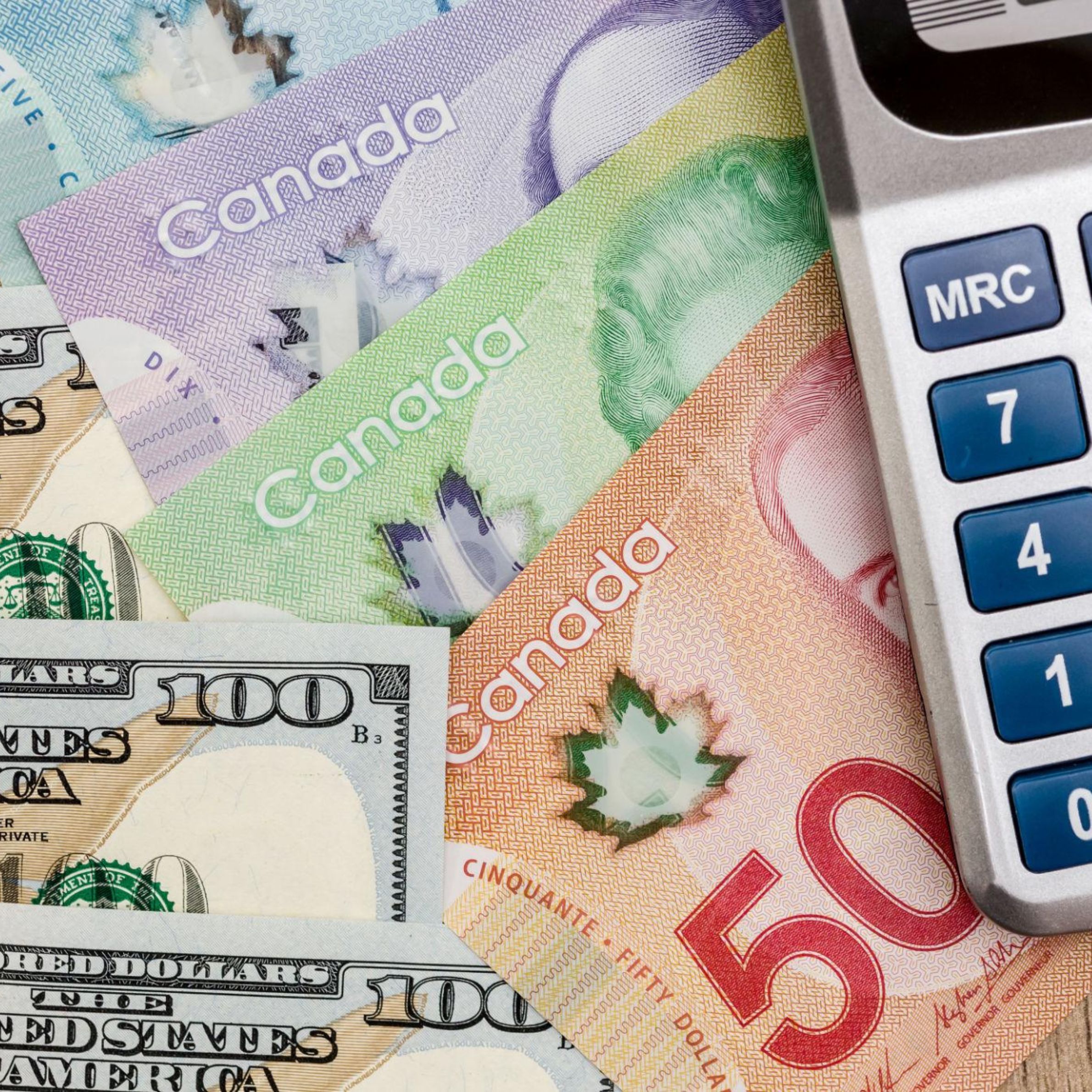
How to Save Money When Exchanging Currency in Canada: A Practical Guide
Whether you are planning a vacation, visiting family abroad, studying overseas, or simply need foreign currency for an upcoming trip, exchanging Canadian dollars is an important part of preparing for international travel. However, many travelers focus only on the destination and overlook one of the simplest ways to manage their travel budget: getting a competitive currency exchange rate.
Even a small difference in the exchange rate can become significant when exchanging hundreds or thousands of Canadian dollars. Understanding how currency exchange works, knowing the difference between buying and selling rates, and comparing your options can help you make more informed financial decisions.
For Canadians, especially those living in Toronto and Scarborough, local currency exchange services can provide a convenient way to obtain physical USD or EUR before traveling.
Why Currency Exchange Rates Matter
Currency values change constantly because of economic conditions, interest rates, inflation, international trade, and market demand. As a result, the amount of foreign currency you receive for your Canadian dollars can vary depending on when and where you exchange your money.
For example, someone exchanging CAD for U.S. dollars needs to understand how much Canadian currency is required to purchase a specific amount of USD. The same principle applies when purchasing euros or other foreign currencies.
The difference may seem small on a single transaction, but it can add up.
If you are exchanging $1,000 CAD, even a modest difference in the effective rate can mean receiving noticeably more or less foreign currency. This is why travelers should look beyond simply asking whether a provider “exchanges currency” and instead understand the actual rate being offered.
Buy Rates and Sell Rates Explained
One of the most important concepts in currency exchange is the difference between a buy rate and a sell rate.
From the perspective of a currency exchange business, the buy rate generally refers to the rate at which the business purchases foreign currency from a customer. The sell rate is the rate at which the business sells foreign currency to a customer.
These rates are not necessarily identical.
For example, if you are traveling from Canada to the United States and need USD, you will generally be looking at the provider’s USD selling rate. If you return from your trip with unused USD and want to convert it back into Canadian dollars, the provider’s USD buying rate becomes relevant.
Understanding this distinction can prevent confusion when comparing currency exchange services.
Compare the Actual Exchange Rate
One of the easiest ways to make a better currency-exchange decision is to compare the rates available from different providers.
Don’t automatically choose the first option you see.
Banks, airports, hotels, online services, and dedicated currency exchange businesses may offer different rates and transaction structures. Convenience can also influence the cost of exchanging money.
Airport exchange counters, for instance, may be convenient for travelers who need cash immediately, but convenience should still be balanced against the exchange rate and any applicable fees.
Before completing a transaction, ask:
- What exchange rate am I receiving?
- Is there a separate transaction fee?
- How much foreign currency will I receive?
- Is the quoted rate the final rate?
- Are there minimum or maximum transaction requirements?
- What identification is required?
These simple questions can make it easier to compare your options.
Decide How Much Foreign Currency You Actually Need
Another common mistake is exchanging too much money.
While having some local currency can be useful when traveling, carrying a large amount of cash may not always be necessary. Your ideal amount depends on your destination, travel plans, accommodation arrangements and access to other payment methods.
Consider the expenses for which cash may be particularly useful, such as:
- Transportation
- Tips
- Small purchases
- Local markets
- Restaurants
- Emergency expenses
- Places that may not accept cards
Creating a rough daily cash budget can help you determine how much currency to purchase before departure.
At the same time, avoid exchanging large amounts simply because you are worried about running out. You can often plan a combination of cash and other payment methods depending on your destination.
USD and EUR Are Common Travel Currencies
For Canadians, the U.S. dollar is particularly important because of Canada’s proximity to the United States and the number of Canadians who travel there for vacations, shopping, business and family visits.
The euro is also widely used by Canadians traveling to European countries that use the euro as their official currency.
If you are planning a trip to the United States or Europe, purchasing some foreign currency before departure can give you peace of mind and ensure that you have cash available as soon as you arrive.
The key is to understand the rate you are receiving and exchange an amount appropriate for your needs.
Why Local Currency Exchange Can Be Convenient
There are situations where visiting a local currency exchange business can be more convenient than waiting until you arrive at your destination.
A local provider allows you to organize your travel money before leaving Canada. This can be particularly useful if you want to know how much foreign currency you have available before your trip.
Money Days (https://moneydays.ca/), for example, operates a dedicated currency exchange location in Scarborough and provides USD and EUR buying and selling services. Its website also displays its current cash exchange rates, allowing customers to check rates before visiting.
For residents in the Scarborough area, having a local exchange option can make planning foreign-currency needs more straightforward.
Cash vs. Card: Which Is Better?
There is no universal answer to whether cash or cards are better for international travel.
Cash can be useful for smaller purchases, transportation, tipping and situations where cards are not accepted. Cards, meanwhile, can provide convenience for larger purchases and reduce the need to carry substantial amounts of physical currency.
The most practical approach may be to use a combination.
Before traveling, check your bank or card provider’s foreign transaction policies. Some cards may charge foreign transaction fees, while others may offer different exchange arrangements.
Likewise, don’t assume that using a card automatically gives you the best exchange rate. Review the terms associated with your card before relying on it overseas.
Don’t Leave Currency Exchange Until the Last Minute
Last-minute currency exchange can limit your choices.
If you wait until you are standing inside an airport shortly before departure, you may have little opportunity to compare rates or find the amount of foreign currency you actually need.
Planning ahead gives you time to research providers, compare rates and determine your budget.
It also gives you an opportunity to ask questions about identification requirements and transaction limits.
Money Days states that it is a cash-only currency exchange business and requires valid government-issued photo identification for currency exchange transactions in accordance with applicable FINTRAC requirements.
Knowing requirements like these before visiting can make the process smoother.
Choose a Currency Exchange Provider Carefully
Price is important, but it should not be the only factor when selecting a currency exchange provider.
Look for a business that clearly communicates its rates, requirements and operating policies. Transparency is particularly important when you are dealing with money.
You may also want to consider:
- Whether the business has a physical location
- Which currencies it handles
- Whether rates are publicly displayed
- Whether identification is required
- Whether the provider is appropriately registered
- Whether the business clearly explains its transaction process
- Whether you can contact the business with questions
Money Days identifies itself as a Money Services Business registered with FINTRAC and operates from 1143 Morningside Avenue, Unit 3, in Scarborough. Its published hours are Monday through Friday from 10:00 a.m. to 6:00 p.m.
What If You Need a Currency That Isn’t Listed?
Travel plans are not always limited to the most common currencies.
You may be traveling to a destination where USD or EUR is not the primary currency. In that situation, it can be useful to contact the exchange provider in advance rather than assuming the currency will be available when you arrive.
Money Days notes in its FAQ that customers can contact the business about foreign currencies that are not listed among its regularly traded currencies and that it may be able to order requested currencies.
Planning ahead is particularly important when you need a less commonly requested currency.
Smart Currency Exchange Starts With Preparation
Getting a good currency exchange deal is not necessarily about finding the lowest advertised number. It is about understanding what the rate means, comparing realistic options and knowing exactly how much foreign currency you will receive for your Canadian dollars.
Before your next trip, take a few minutes to:
- Determine how much foreign currency you actually need.
- Check current exchange rates.
- Compare more than one provider when possible.
- Ask about additional fees or transaction requirements.
- Confirm which identification you need.
- Avoid exchanging more cash than necessary.
- Plan your currency needs before reaching the airport.
- Keep some flexibility for unexpected travel expenses.
For Toronto and Scarborough residents, a local provider such as Money Days can be one option to consider when arranging USD or EUR cash before an international trip.
Ultimately, currency exchange is a simple financial transaction, but small differences can affect your travel budget. By planning ahead, comparing rates and understanding how buying and selling rates work, Canadian travelers can make more informed decisions and avoid unnecessary surprises.
A little preparation before leaving home can mean more money available for the experiences that actually matter once you reach your destination.
Finally, we suggest checking out The Reca Blog for more insightful articles.