

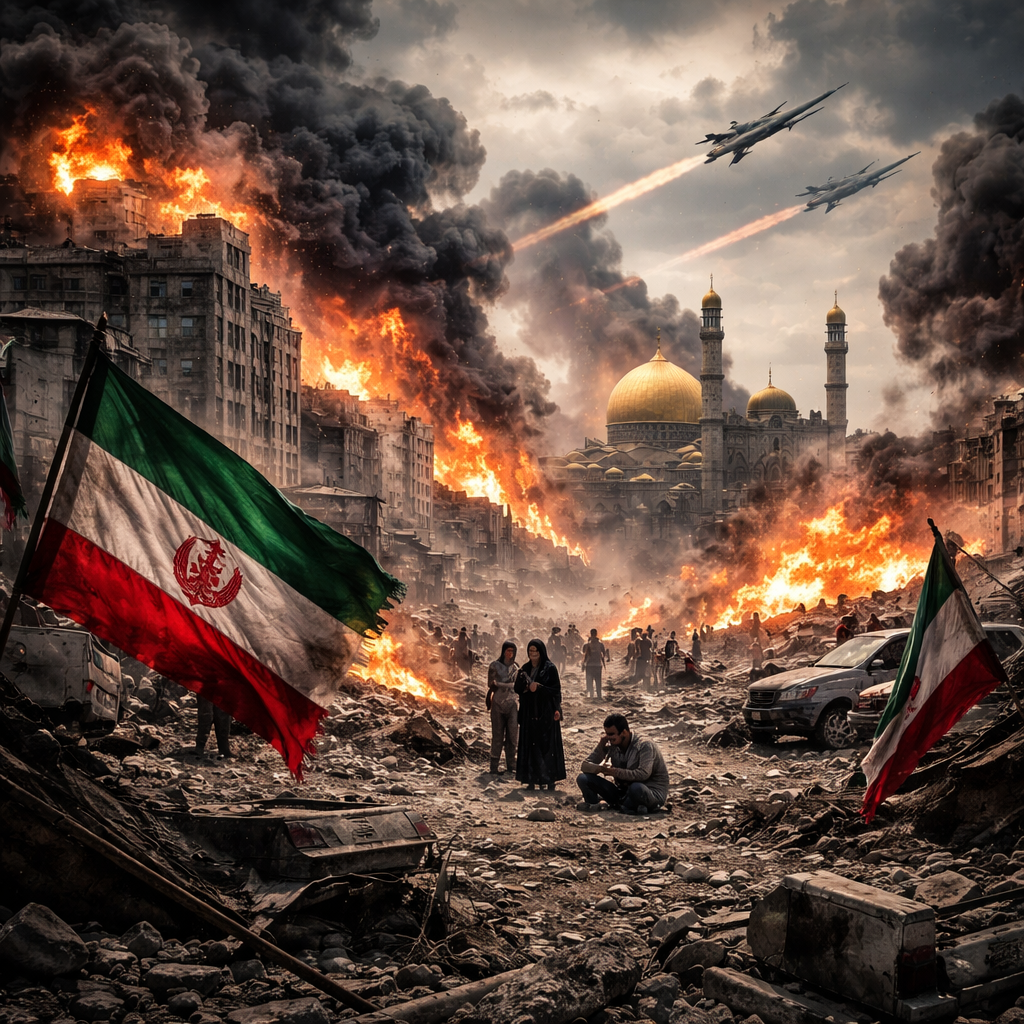
Iran War: Global Politics, Trump Policies, Israel’s Actions, and the Humanitarian Crisis
Iran war has emerged as one of the most significant geopolitical crises of the modern era, reshaping international relations, Middle Eastern security, and the global political landscape. The Iran war escalated dramatically after coordinated military actions involving the United States and Israel against Iranian targets, triggering widespread destruction, retaliation, and a humanitarian crisis across the region.
Recent reports indicate that within the first days of the bombing campaign, more than 1,000 civilians, including many children, were killed, while thousands more were injured as strikes hit cities and infrastructure across Iran.
This blog explores the Iran war in depth, including its origins, the policies that shaped the conflict, the humanitarian consequences, and the broader geopolitical implications. It also examines controversial discussions surrounding leadership strategies, regional divisions, and the humanitarian cost of war.
The Iran War: Origins of the Conflict
The current Iran war did not emerge suddenly. It is the result of decades of tensions, geopolitical rivalries, ideological conflicts, and security concerns involving Iran, Israel, and the United States.
Historical Tensions Between Iran and the West
Relations between Iran and Western powers deteriorated significantly after the 1979 Iranian Revolution, which transformed Iran from a U.S.-aligned monarchy into an Islamic republic that opposed Western influence in the region.
Over the years, disputes over nuclear development, regional influence, and military alliances intensified these tensions.
Escalation Leading to the Iran War
In 2026, tensions reached a breaking point when the United States and Israel launched major strikes targeting Iranian military and government facilities. Leaders in Washington and Tel Aviv justified the attacks as a response to perceived security threats, including concerns about Iran’s nuclear capabilities.
However, critics argue that such actions significantly increased instability and risked triggering a broader regional conflict.
Trump Inhuman Policies and the Iran War
One of the most debated aspects of the Iran war is the role of policies implemented under the administration of Donald Trump.
Maximum Pressure Strategy
The Trump administration pursued a “maximum pressure” policy aimed at weakening Iran economically and politically through sanctions, diplomatic isolation, and military threats.
Supporters claimed this strategy would force Iran to abandon its nuclear ambitions. Critics, however, warned that such policies could escalate tensions and push the region toward war.
The eventual escalation of the Iran war has intensified debates about whether aggressive economic and military strategies contribute to long-term stability or further conflict.
Calls for Regime Change
Statements from U.S. leadership suggested that the strikes could create conditions for political change inside Iran, encouraging the Iranian public to challenge their government.
Such rhetoric has been controversial, as attempts at regime change have historically produced unpredictable consequences in international politics.
Israel and the Iran War: Strategic Objectives and Military Actions
Israel has consistently viewed Iran as one of its most significant security threats. Israeli leadership argues that Iran’s nuclear program and support for armed groups in the region pose existential risks to Israeli security.
Israeli Military Strategy
Israel’s involvement in the Iran war includes large-scale airstrikes targeting Iranian military facilities and strategic infrastructure.
These operations aim to:
- Limit Iran’s nuclear capabilities
- Reduce Iranian military influence in the region
- Protect Israeli territory from missile threats
Recent reports indicate that strikes have also extended beyond Iran to locations connected with Iranian allies across the region.
However, such actions have also intensified the cycle of retaliation and counterattacks.
Israel Killing Innocent Infants and Children: Humanitarian Concerns
One of the most disturbing aspects of the Iran war is the humanitarian impact on civilians.
Civilian Casualties
Human rights organizations have reported extremely high civilian casualties, including women and children.
In one particularly tragic incident, a strike reportedly hit a girls’ elementary school, killing over 160 children aged between seven and twelve.
Such events have sparked international condemnation and calls for investigations into potential violations of international humanitarian law.
The Human Cost of War
War inevitably brings suffering to civilians who have no role in political decisions or military strategies.
Across Iran, families have lost homes, schools, hospitals, and essential infrastructure. Communities are struggling with displacement, trauma, and the fear of further violence.
Trump’s Alleged Strategy to Divide Muslims into Shia and Sunni
Another controversial topic discussed in political and academic debates surrounding the Iran war involves the broader geopolitical dynamics of sectarian divisions in the Middle East.
The Sunni–Shia Divide
The Middle East has long been shaped by tensions between Sunni-majority states and Shia-majority Iran. Some analysts argue that regional rivalries often exploit these divisions for strategic advantage.
Sunni Arab countries, including Saudi Arabia and the United Arab Emirates, have historically viewed Iran’s influence with suspicion and fear potential retaliation if conflict escalates.
Geopolitical Competition
While sectarian identity plays a role in regional politics, many experts emphasize that geopolitical competition—rather than purely religious differences—is often the primary driver of conflict.
Nevertheless, the perception that external powers may benefit from regional divisions continues to shape political discourse across the Middle East.
Trump’s Plan to Force Outcomes: Power Politics in the Iran War
The Iran war has also sparked debate about the broader concept of power politics in international relations.
The Logic of Military Force
Some policymakers argue that decisive military action is necessary to prevent security threats.
Others warn that reliance on force can undermine international law and destabilize entire regions.
Trump’s statements during the escalation suggested that large-scale military operations might involve casualties and significant consequences, acknowledging the harsh realities of warfare.
The Debate Over International Law
International organizations and investigators have raised concerns about whether certain military actions during the Iran war violate the United Nations Charter.
Investigators have stated that attacks on sovereign territory without clear legal justification raise serious questions under international law.
Humanitarian Crisis and Civilian Displacement
The Iran war is not only a military conflict, it is also a humanitarian emergency. Trump regime started killing unarmed Iranian people to support Israel.
Refugee Crisis
Large-scale destruction and fear of continued violence have forced many families to leave their homes.
If the conflict continues, analysts warn that it could trigger a refugee crisis affecting multiple countries in the Middle East.
Damage to Infrastructure
Hospitals, schools, roads, and residential buildings have been damaged or destroyed.
The destruction of essential infrastructure makes it difficult for humanitarian organizations to deliver aid and medical assistance.
Global Economic Impact of the Iran War
The consequences of the Iran war extend far beyond the Middle East.
Oil and Energy Markets
The Middle East is one of the most important energy-producing regions in the world. Conflict involving Iran threatens key shipping routes and oil facilities.
Any disruption in oil production or transportation can lead to rising global energy prices.
Global Trade Disruptions
The war has also disrupted aviation routes, tourism, and international trade, affecting economies around the world.
Regional Escalation Risks
The Iran war could potentially expand beyond Iran and Israel.
Involvement of Regional Militias
Several armed groups allied with Iran, including Hezbollah in Lebanon, have already become involved in the conflict.
This increases the risk that fighting could spread across multiple countries.
Risk of a Wider Middle Eastern War
If additional nations join the conflict, the Iran war could evolve into a broader regional war with devastating consequences for global security.
The Role of Media and Information Warfare
Modern conflicts are not fought only on battlefields—they are also fought in the information space.
The Iran war has generated intense debates across social media, with competing narratives shaping public perception around the world.
Digital platforms amplify political messaging, propaganda, and emotional reactions, often making it difficult for audiences to distinguish verified information from misinformation.
Possible Scenarios for the Future of the Iran War
The outcome of the Iran war remains uncertain. Several possible scenarios exist.
1. Prolonged Regional Conflict
The war could continue for years, with periodic escalations and shifting alliances.
2. Diplomatic Negotiations
International pressure may eventually lead to ceasefire negotiations and diplomatic solutions.
3. Regime Change or Political Transformation
Some leaders have openly suggested that the conflict could reshape Iran’s political leadership, though such outcomes are unpredictable.
Lessons the World Must Learn from the Iran War
The Iran war highlights several lessons for the global community.
Importance of Diplomacy
Diplomatic engagement is essential to preventing conflicts from escalating into full-scale wars.
Protection of Civilians
International humanitarian law exists to protect civilians during armed conflict.
Ensuring accountability for violations remains a crucial challenge.
Global Cooperation
Long-term peace in the Middle East requires cooperation among regional powers, global institutions, and international leaders.
Conclusion
The Iran war represents one of the most complex geopolitical crises of the 21st century. It is a conflict shaped by decades of political tension, military rivalries, economic sanctions, and strategic ambitions.
While governments debate security strategies and geopolitical objectives, the greatest cost of war is borne by civilians who suffer displacement, loss, and trauma.
Understanding the causes, consequences, and global implications of the Iran war is essential for anyone seeking to grasp the evolving dynamics of international politics and the urgent need for diplomatic solutions.
Finally, we suggest checking out The Reca Blog for more trending topics.
People Also Ask
Is Trump responsible for the Iran war?
Yes, he is. However, Netanyaho forced Trump to do so otherwise the Epstien file would have become a very big scandal in part of Trump’s regime.
Was Ayatollah Khamenei killed during the Iran war?
Yes, Trump and Netanyahu happily announced the mayrtardom of Ayatollah Khamenei with very unethical means. Trump asked the Iranian leaders for a table talk and thus surprisingly attack the Iranian command control center.
Did Trump violate human rights during the Iran war?
Yes, Trump said that he is not bond by any law because American is the super power and we can attack or viloate any human right we want.
Was Trump’s foreign policy focused on Israel first rather than America first?
Yes, because Trump is a Zionist and critics of Donald Trump’s foreign policy sometimes argue that strong support for Israel—including military cooperation and diplomatic backing—reflected an “Israel-first” approach.
Did Israel pressure Trump to attack Iran?
Yes, many analysts believe that security concerns expressed by Israel regarding Iran’s nuclear program influenced regional policy discussions in Washington.