

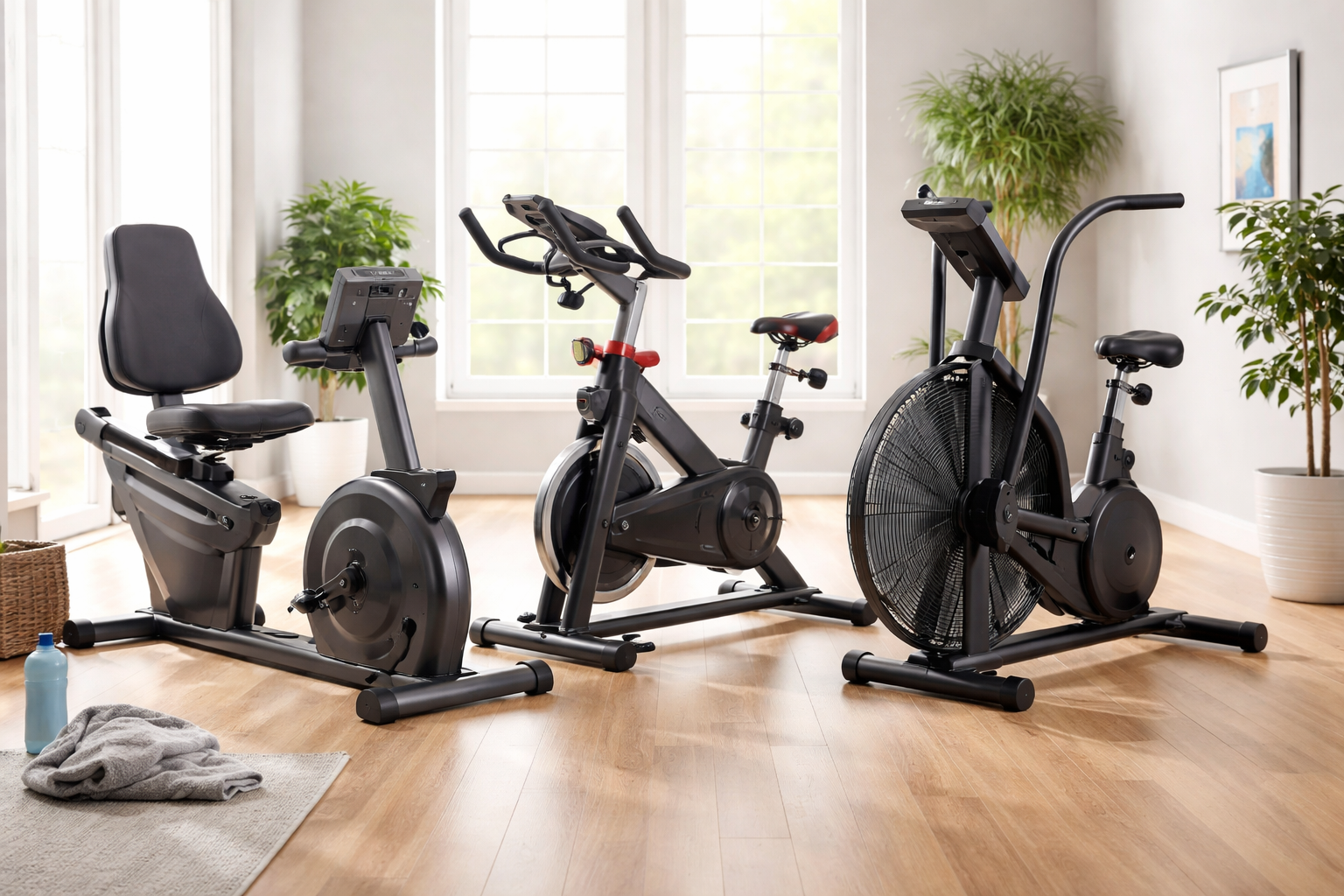
Types of Stationary Bicycles: A Complete Guide to Choosing the Right Indoor Bike
Indoor cycling has become a cornerstone of modern fitness routines, offering convenience, performance tracking, and year-round usability. As the demand for home and commercial gym equipment grows, understanding the types of stationary bicycles is essential for making an informed investment. We present a comprehensive, expertly structured guide covering every major category of stationary bike, their features, benefits, and ideal use cases.
What are Stationary Bicycles
Stationary bicycles are indoor exercise machines designed to simulate outdoor cycling while remaining fixed in place. They are engineered for cardiovascular endurance, muscle conditioning, rehabilitation, and high-intensity training. Each type of stationary bicycle serves a distinct purpose, tailored to different fitness levels, training goals, and physical needs.
Upright Types of Stationary Bicycles
Classic Design with Versatile Performance
Upright stationary bicycles closely resemble traditional outdoor bicycles. Riders sit upright, pedals positioned directly beneath the body, and handlebars placed slightly forward.
Key Characteristics
- Vertical seating posture
- Compact footprint
- Adjustable seat and handlebars
- Magnetic or friction resistance systems
Benefits
- Strengthens quadriceps, hamstrings, calves, and glutes
- Engages core muscles through upright posture
- Ideal for moderate to intense cardio workouts
Best Suited For
- General fitness enthusiasts
- Home gyms with limited space
- Users transitioning from outdoor cycling to indoor workouts
Upright bikes strike a balance between performance and comfort, making them one of the most widely used stationary bicycle types.
Recumbent Types of Stationary Bicycles
Ergonomic Comfort and Joint Support
Recumbent stationary bicycles feature a reclined seating position with a backrest and pedals placed in front of the body. This design prioritizes comfort and spinal alignment.
Key Characteristics
- Large, cushioned seat with lumbar support
- Step-through frame for easy access
- Lower center of gravity
Benefits
- Reduced strain on knees, hips, and lower back
- Improved posture and spinal support
- Excellent for extended workout sessions
Best Suited For
- Seniors and beginners
- Individuals undergoing rehabilitation
- Users with joint pain or mobility limitations
Recumbent bikes deliver effective cardiovascular training while minimizing physical stress, making them a preferred choice for low-impact exercise.
Spin Bikes (Indoor Cycling Bikes)
High-Intensity Performance Training
Spin bikes, also known as indoor cycling bikes, are designed to replicate road racing conditions. They are commonly used in group fitness classes and professional training environments.
Key Characteristics
- Heavy flywheel for realistic momentum
- Friction or magnetic resistance
- Aggressive riding posture
- Minimal onboard electronics
Benefits
- Supports high-intensity interval training
- Builds muscular endurance and power
- Simulates outdoor cycling dynamics
Best Suited For
- Advanced riders
- Athletes and performance-focused users
- High-calorie burn workouts
Spin bikes offer unmatched realism and intensity, making them ideal for users seeking competitive-level conditioning.
Dual-Action (Air) Types of Stationary Bicycles
Full-Body Cardiovascular Training
Dual-action stationary bicycles incorporate moving handlebars, allowing simultaneous upper and lower body engagement. Resistance is generated by air, increasing with pedaling speed.
Key Characteristics
- Air resistance fan system
- Moving handlebars for arm involvement
- Rugged industrial design
Benefits
- Engages arms, shoulders, chest, and back
- Infinite resistance based on effort
- Exceptional calorie-burning potential
Best Suited For
- Cross-training athletes
- High-intensity conditioning programs
- Functional fitness and endurance training
These bikes are performance-driven machines designed for users who demand total-body workouts.
Smart Stationary Bicycles
Technology-Driven Interactive Training
Smart stationary bicycles integrate advanced digital features, connectivity, and immersive training platforms. They redefine indoor cycling through data-driven workouts.
Key Characteristics
- Touchscreen displays
- Bluetooth and Wi-Fi connectivity
- App integration and virtual rides
- Automatic resistance adjustment
Benefits
- Real-time performance tracking
- Guided training programs
- Enhanced motivation through gamification
Best Suited For
- Tech-savvy users
- Structured training plans
- Home fitness enthusiasts seeking engagement
Smart bikes transform routine workouts into interactive fitness experiences with measurable outcomes.
Folding Stationary Bicycles
Compact and Space-Efficient Solutions
Folding stationary bicycles are engineered for portability and storage efficiency. They offer essential cycling functionality in a compact frame.
Key Characteristics
- Foldable frame design
- Lightweight construction
- Basic resistance settings
Benefits
- Easy storage in small apartments
- Affordable entry-level option
- Convenient for occasional use
Best Suited For
- Small living spaces
- Casual fitness routines
- Beginners exploring indoor cycling
These bikes deliver practicality without compromising fundamental fitness benefits.
Desk Stationary Bicycles
Productivity Meets Fitness
Desk stationary bicycles integrate a work surface, allowing users to cycle while performing desk-based tasks.
Key Characteristics
- Integrated desk or tabletop
- Low-impact pedaling
- Quiet resistance mechanisms
Benefits
- Encourages movement during sedentary work
- Improves circulation and energy levels
- Supports long-duration, low-intensity exercise
Best Suited For
- Remote professionals
- Office environments
- Users aiming to reduce sedentary behavior
Desk bikes blend wellness and productivity, promoting healthier daily routines.
Hybrid Stationary Bicycles
Versatility in One Machine
Hybrid stationary bicycles combine features from upright and recumbent models, offering adjustable configurations for varied workouts.
Key Characteristics
- Convertible seating positions
- Adjustable pedal alignment
- Multi-function resistance systems
Benefits
- Adaptable to different users
- Supports varied training intensities
- Maximizes equipment value
Best Suited For
- Multi-user households
- Fitness centers
- Users seeking flexibility
Hybrid bikes provide comprehensive solutions for diverse fitness needs.
Commercial vs Home Stationary Bicycles
Build Quality and Usage Demands
Commercial Stationary Bicycles
- Heavy-duty frames
- High resistance durability
- Designed for continuous use
Home Stationary Bicycles
- Compact and lightweight
- User-friendly interfaces
- Cost-effective for personal use
Choosing between commercial and home models depends on frequency, intensity, and user volume.
How to Choose the Right Stationary Bicycle
Selecting the optimal stationary bike requires evaluating:
- Fitness goals
- Physical limitations
- Available space
- Budget considerations
- Desired features and technology
Each type of stationary bicycle delivers unique advantages, ensuring there is a perfect match for every fitness objective.
Conclusion
Understanding the types of stationary bicycles empowers informed decision-making and maximizes workout effectiveness. From upright and recumbent bikes to high-performance spin and smart models, each category serves a specific purpose within indoor fitness. By aligning personal goals with the right stationary bicycle type, long-term health, performance, and consistency become achievable realities.
Finally, we suggest checking out The Reca Blog for more insightful articles.
FAQs
What are the main types of stationary bicycles?
The main types include upright bikes, recumbent bikes, spin (indoor cycling) bikes, air bikes, dual‑action bikes, and foldable exercise bikes — each suited for different fitness goals and comfort levels.
What is the difference between upright and recumbent stationary bikes?
Upright bikes place you in a traditional cycling posture with the pedals beneath you, while recumbent bikes have a reclined seat and backrest, offering more comfort and lower body support.
Are spin bikes better than regular stationary bikes?
Spin bikes mimic outdoor road bicycles and are ideal for high‑intensity workouts and endurance training, whereas regular upright bikes are more comfortable for general use.
Which type of stationary bike burns the most calories?
Air bikes and spin bikes generally burn more calories due to higher intensity and full‑body or vigorous pedaling workouts.
Is a stationary bike good for weight loss?
Yes — using a stationary bike regularly increases heart rate and burns calories, making it effective for weight loss when combined with proper diet and routine.
Which stationary bike is best for beginners?
Upright bikes and foldable exercise bikes are often best for beginners because they’re easy to use, comfortable, and usually more affordable.
Can recumbent bikes help with back pain?
Yes — recumbent bikes provide back support and a relaxed riding position, reducing strain on the back and joints for many users.
Do stationary bikes improve cardiovascular health?
Absolutely — they help strengthen the heart and improve circulation through consistent aerobic workouts.
What should I consider when choosing a stationary bike?
Key factors include your fitness goals, space available, comfort, resistance type, and budget.
Are foldable stationary bikes worth it?
Yes — foldable bikes are a good choice if you have limited space, are a casual user, or want an affordable cardio machine that’s easy to store.


Leave feedback about this