

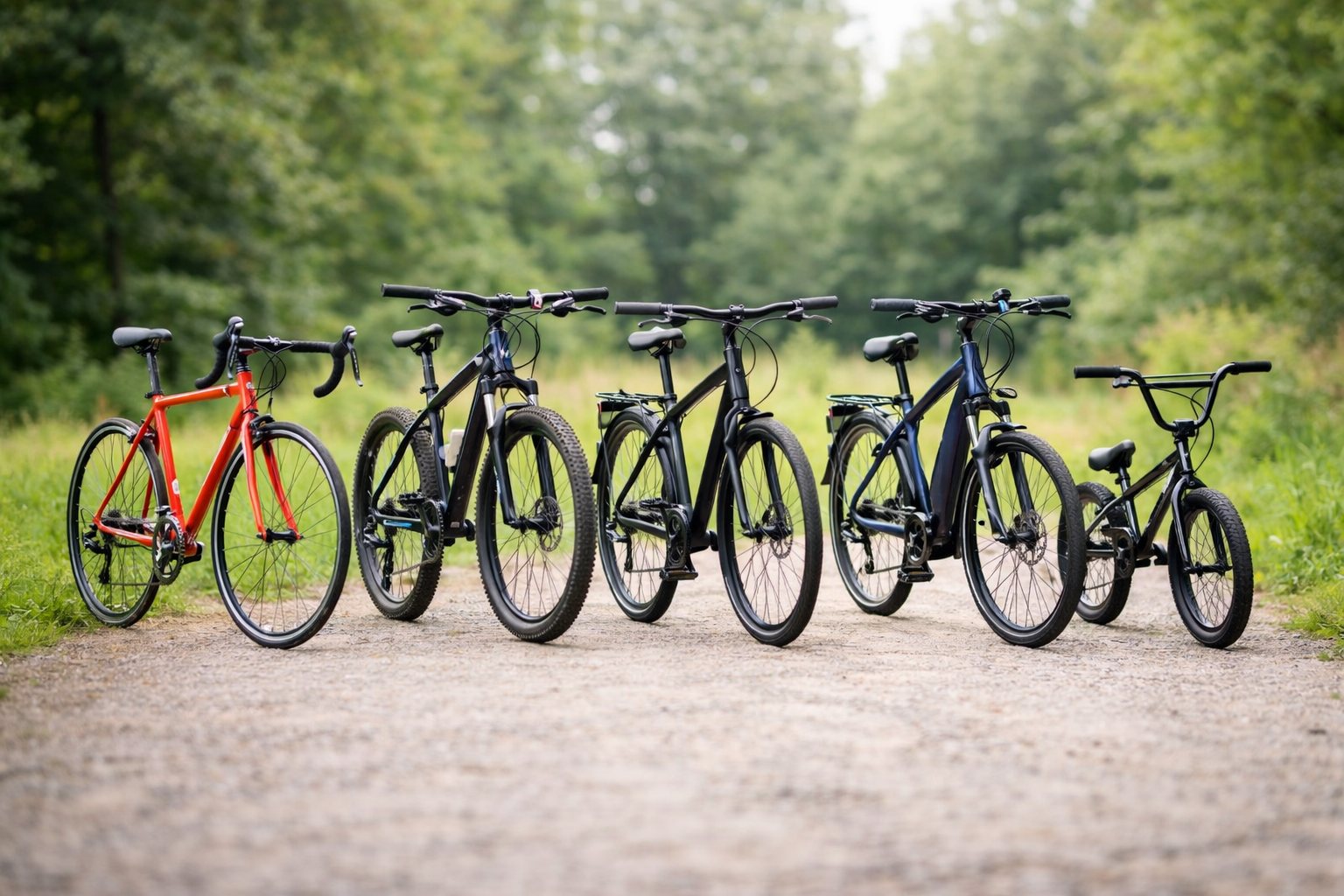
Types of Bicycles – A Complete Guide for Every Rider
Bicycles are no longer just simple machines for getting from point A to point B. Today, they come in a variety of types, each designed for specific terrains, purposes, and riding styles. Whether you are a casual rider, a fitness enthusiast, or a professional cyclist, choosing the right bike is crucial. In this guide, we’ll explore the main types of bicycles, their features, benefits, and tips for picking the right one for you.
1. Road Bikes – Speed on Pavement
Road bikes are built for speed, efficiency, and long-distance rides on smooth pavement. They are lightweight with thin tires and a geometry that puts riders in a more aerodynamic position.
Features:
- Drop handlebars
- Narrow tires (23–28mm)
- Lightweight aluminum or carbon frame
Best for: Long-distance road cycling, commuting on paved roads, racing
Pros: Fast, efficient, excellent for endurance rides
Cons: Not suitable for off-road or rough terrain
2. Mountain Bikes – Conquer Any Trail
Mountain bikes (MTBs) are rugged bikes designed to handle rough trails, dirt paths, and steep hills. They are built for durability and control in off-road conditions.
Features:
- Wide, knobby tires
- Front suspension (hardtail) or full suspension (dual shock)
- Strong frame and disc brakes
Best for: Trail riding, downhill cycling, off-road adventures
Pros: Durable, great traction, handles rough terrain
Cons: Heavier, slower on paved roads
3. Hybrid Bikes – The Best of Both Worlds
Hybrid bikes combine elements of road and mountain bikes. They are versatile, comfortable, and suitable for city commuting or recreational rides.
Features:
- Medium-width tires
- Flat handlebars
- Comfortable upright seating position
Best for: Commuting, leisure rides, light trails
Pros: Comfortable, versatile, beginner-friendly
Cons: Less speed than road bikes, less rugged than mountain bikes
4. Cruiser Bikes – Relaxed and Stylish Riding
Cruiser bikes are perfect for casual riders who prioritize comfort and style over speed. They are commonly used on beaches, boardwalks, or flat terrain.
Features:
- Wide, cushioned saddle
- Upright riding position
- Balloon tires
Best for: Leisure riding, beach rides, flat terrain
Pros: Comfortable, stylish, easy to ride
Cons: Heavy, not suitable for long distances or hills
5. Electric Bikes (E-Bikes) – Pedal with a Boost
E-bikes are bicycles equipped with an electric motor to assist pedaling. They are becoming increasingly popular for commuting and reducing physical effort on long rides.
Features:
- Motor-powered pedal assist
- Battery with varying range (20–70 miles)
- Can resemble road, mountain, or hybrid bikes
Best for: Commuters, long-distance riders, people with limited physical strength
Pros: Easier on hills, faster commuting, less tiring
Cons: Expensive, heavier, requires charging
6. BMX Bikes – Tricks, Jumps, and Stunts
BMX bikes are small, durable bikes designed for racing, stunts, and off-road tracks. They are popular among kids, teenagers, and stunt enthusiasts.
Features:
- Small frames and wheels
- Sturdy construction
- Single gear
Best for: Tricks, stunts, racing on BMX tracks
Pros: Durable, maneuverable, fun for stunts
Cons: Not practical for long rides or commuting
7. Touring Bikes – Travel in Comfort
Touring bikes are designed for long-distance travel and carrying heavy loads. They focus on comfort and stability for multi-day trips.
Features:
- Sturdy frame
- Multiple gears for hills
- Mounts for racks and panniers
Best for: Long-distance touring, bikepacking
Pros: Comfortable for long rides, can carry luggage
Cons: Heavier, slower than road bikes
8. Gravel Bikes – Adventure Anywhere
Gravel bikes are versatile and perfect for mixed terrains. They combine speed with off-road capability, making them ideal for adventure riders.
Features:
- Wider tires than road bikes
- Drop handlebars
- Disc brakes
Best for: Gravel paths, light trails, long adventures
Pros: Versatile, stable, comfortable for long rides
Cons: Less efficient on smooth roads than road bikes
9. Folding Bikes – Compact and Convenient
Folding bikes are designed for urban commuting where space is limited. They can be folded and carried on public transport or stored in small apartments.
Features:
- Foldable frame
- Small wheels (16–20 inches)
- Lightweight
Best for: Urban commuting, easy storage
Pros: Portable, convenient, space-saving
Cons: Smaller wheels affect stability, less speed
How to Choose the Right Bike
Choosing the right bike depends on your needs, riding style, and budget. Ask yourself:
- Will I ride mostly on roads, trails, or a mix?
- Do I prioritize speed, comfort, or versatility?
- Will I need to carry luggage or commute long distances?
Visiting a local bike shop for a test ride is always a good idea to ensure comfort and fit.
Conclusion
From road bikes to electric bikes, every type of bicycle serves a specific purpose. Understanding the differences can help you select a bike that matches your lifestyle and riding goals. Whether you’re exploring trails, commuting, or cruising along the beach, the right bike makes every ride enjoyable.
Finally, we suggest checking out The Reca Blog for more insightful articles.
FAQs
What are the main types of bicycles?
The most common bike types include road bikes, mountain bikes, hybrid bikes, city/commuter bikes, cruiser bikes, BMX bikes, and electric bikes, each tailored to different riding styles and terrains.
What is a road bike good for?
Road bikes are lightweight and fast with narrow tires and drop handlebars, ideal for paved roads, long distances, and high‑speed riding.
How is a mountain bike different from a hybrid bike?
Mountain bikes are built for rugged trails with suspension and wide knobby tires, while hybrid bikes blend features of road and mountain bikes for versatile riding on pavement and light off‑road paths.
Are electric bikes worth it?
Yes, electric bikes (e‑bikes) provide pedal assistance that makes longer rides, hills, and commuting easier, while still offering exercise benefits.
What bike should a beginner rider choose?
For most beginners, hybrid bikes or city/commuter bikes are excellent choices because they’re comfortable, easy to ride, and versatile for various surfaces.
What is a BMX bike used for?
BMX bikes are compact, sturdy bikes designed for tricks, jumps, and racing on dirt tracks or skate parks.
Can I ride a mountain bike on the road?
Yes, a mountain bike can be ridden on the road, although it may be slower and less efficient than a road or hybrid bike due to its heavier frame and knobby tires.
What is a cruiser bike?
Cruiser bikes feature a relaxed riding position, wide tires, and comfortable seats, making them ideal for casual rides on flat surfaces and around town.
Do kids need special types of bicycles?
Yes, kids bikes come in smaller sizes with features like balance bikes (no pedals) for beginners and pedal bikes with training wheels for young riders.
What bicycle is best for commuting?
City bikes and hybrid bikes are excellent for commuting because they offer comfort, upright riding, and practical features like fenders and racks for daily use.

Leave feedback about this