

Subsidized vs Unsubsidized Student Loans: A Complete Guide to Making Smarter Borrowing Decisions
Subsidized vs unsubsidized student loans is one of the first and most important financial decisions prospective college students and their families face when planning how to pay for higher education. This article dives deep into both loan types, comparing them, explaining how they work, exploring recent federal policy changes affecting them, and helping you decide what might make sense in today’s rapidly changing financial aid environment.
What Are Subsidized vs Unsubsidized Student Loans?
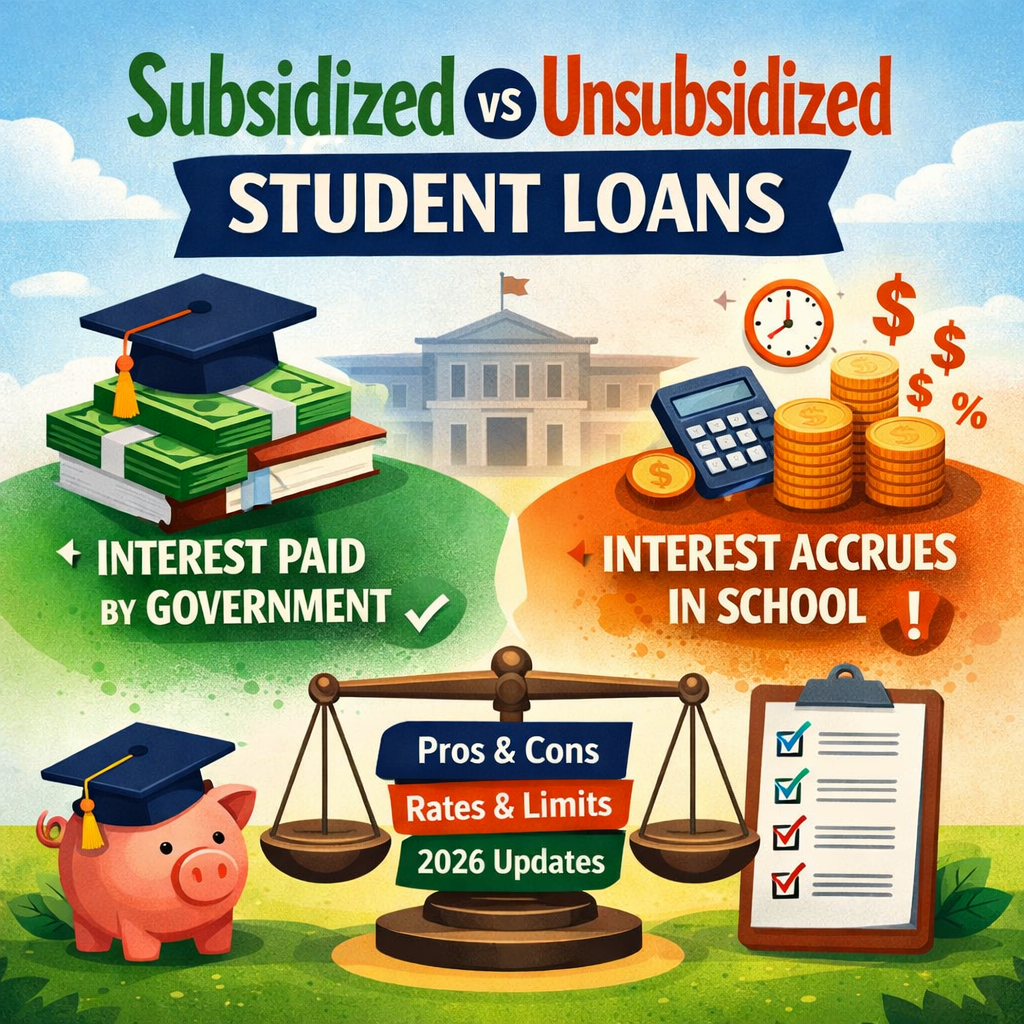
When comparing subsidized vs unsubsidized student loans, the fundamental difference comes down to interest and cost. Subsidized loans are need-based federal loans where the government pays your interest while you’re enrolled at least half-time and during grace periods. In contrast, unsubsidized loans are available regardless of financial need, and interest begins accruing as soon as the loan is disbursed.
To put it simply:
- Subsidized: Government covers interest while you’re in school.
- Unsubsidized: You’re responsible for interest from day one.
Understanding this key distinction gives students and families a major advantage when planning their education financing.
Eligibility: Who Qualifies for Each?
Subsidized Loans
Subsidized loans are exclusively for undergraduate students who demonstrate financial need. Financial need is determined by information you submit through the FAFSA (Free Application for Federal Student Aid).
Key points:
- Must demonstrate financial need.
- Available only to undergraduates enrolled at least half-time.
- Graduate and professional students typically cannot receive subsidized loans.
Unsubsidized Loans
Unsubsidized loans are more broadly available. They do not depend on financial need and are open to both undergraduate and graduate students.
Key points:
- Available regardless of financial need.
- Undergraduate, graduate, and professional students may borrow.
- Interest accrues immediately.
In short: If your FAFSA shows financial need and you’re an undergraduate, you might qualify for subsidized loans. If you don’t meet the need threshold, or if you’re a graduate/professional student, your loan options will be unsubsidized.
How Interest Works
The most critical financial consideration when comparing subsidized vs unsubsidized student loans is interest compilation:
Subsidized Interest Rules
For subsidized loans:
- The federal government pays interest while you’re enrolled at least half-time.
- Interest also doesn’t accrue during the grace period after graduation.
Unsubsidized Interest Rules
For unsubsidized loans:
- Interest starts accruing immediately, even while enrolled in school.
- If you don’t make payments while in school, unpaid interest is added to your principal, a process called “capitalization.”
Example: If you borrow $5,000 unsubsidized, and don’t pay the interest while in school, you could graduate owing significantly more than $5,000 because interest compounds.
This makes subsidized loans less expensive over time — a major advantage for eligible borrowers.
Borrowing Limits
Another major difference between subsidized vs unsubsidized student loans lies in borrowing limits.
Subsidized Loan Limits (Undergraduate Only)
- Typically lower than unsubsidized borrowings.
- The total you can borrow over your undergraduate career for subsidized loans is capped (for example, around $23,000).
Unsubsidized Loan Limits
- Available for both undergraduates and graduates.
- Higher limits: for dependent undergraduates up to ~$31,000; independent undergraduates up to ~$57,500; and graduate students up to ~$138,500.
In practice: If you qualify for both, you might take subsidized loans first (cheaper cost) and then use unsubsidized loans if you still need additional funding.
Loan Costs, Fees, and Repayment Terms
Interest Rates (2025–26 Standard)
For loans disbursed between July 1, 2025 and June 30, 2026:
- Subsidized and unsubsidized loans for undergraduates have the same fixed interest rate (about 6.39%).
- Unsubsidized loans for graduate/professional students have higher rates (around 7.94%).
Origination Fees
All federal student loans include an origination fee — a percentage deducted from your loan before you receive it.
Repayment Terms
Both subsidized and unsubsidized loans typically offer a six-month grace period after you graduate or drop below half-time enrollment before repayment begins.
That said, repayment strategies differ based on your goals (e.g., saving interest vs. minimizing monthly payments). We’ll cover strategies later.
Recent Policy & Trend Updates Impacting Student Loans
Understanding how subsidized vs unsubsidized student loans are evolving helps borrowers plan more effectively.
Federal Policy Changes (Effective 2026)
There are major reforms to student loans beginning July 2026, including:
- Lifetime borrowing caps (about $257,500 total for undergraduate and graduate loans).
- New repayment frameworks (income-based options remain, but plans are changing).
- Graduate and professional borrowing limits introduced.
Critics are concerned that eliminating certain loan types (including subsidized loans for some groups) and tighter caps may make college financing harder, especially for lower-income students.
Budget Proposals Under Debate
There have been proposals to reduce or restructure both subsidized and unsubsidized federal loans. One plan would eliminate subsidized loans and lower unsubsidized limits — pushing students toward private lenders with fewer borrower protections.
These shifts reflect broader debates about how to make higher education more affordable without increasing federal debt. Staying informed about policy changes can directly affect your borrowing strategy.
Pros & Cons: Choosing Between Subsidized and Unsubsidized
Pros of Subsidized Loans
- Government pays interest during school and grace.
- Lower overall cost.
- Great option for students with demonstrated need.
Cons of Subsidized Loans
- Restricted to undergraduates.
- Borrowing limits can be lower.
Pros of Unsubsidized Loans
- Available to virtually all students.
- Higher maximum borrowing amounts.
Cons of Unsubsidized Loans
- Interest accrues immediately, increasing long-term cost.
Bottom line: Subsidized loans are usually better if you qualify, but unsubsidized loans are often necessary to fully cover rising college costs.
Strategies for Repayment and Cost Savings
Here’s how to make the most of your choices:
1. Maximize Subsidized Loans First
If offered both, take subsidized loans first — every dollar of government-paid interest is money you don’t owe.
2. Make Interest Payments While in School
For unsubsidized loans, paying interest while enrolled prevents capitalization and lowers your total cost.
3. Consider Loan Forgiveness & Repayment Plans
Income-driven repayment plans and forgiveness options can ease repayment pressures, especially for high-debt borrowers. While these don’t directly change the subsidized vs unsubsidized distinction, they influence your long-term strategy.
4. Explore Grants and Scholarships First
Grants and scholarship money never have to be repaid. Reducing how much you borrow in the first place is often the smartest financial decision.
Frequently Asked Questions
Q: Do unsubsidized loans cost more than subsidized ones?
Yes, because interest accrues immediately on unsubsidized debt, increasing the total you’ll repay over time.
Q: Can graduate students get subsidized loans?
Generally, no, only undergraduates with financial need qualify for subsidized loans.
Q: Should I pay off unsubsidized loans first?
Often, yes, since they accrue interest immediately, eliminating them first can reduce total costs. But personal financial goals and interest rates matter.
Final Thoughts
Understanding subsidized vs unsubsidized student loans is essential for responsible college financing. Subsidized loans offer clear cost advantages for eligible students, but unsubsidized loans remain a vital option for many borrowers, especially in a landscape of rising tuition prices and evolving federal student loan policies.
Careful planning, staying informed about legislative changes, and strategically managing repayment can make a significant difference in your financial future.
If you’re planning to borrow, or already have federal loans, evaluate your options carefully, consult financial aid advisors, and use the tools available (like FAFSA and federal loan calculators) to make the best decisions for your unique situation.
Finally, we suggest checking out The Reca Blog for more insightful articles.
People Also Ask
What is the main difference between subsidized and unsubsidized student loans?
The key difference is who pays the interest while you’re in school. With subsidized loans, the government covers interest during enrollment and the grace period. With unsubsidized loans, interest begins accruing immediately after disbursement, even while you’re studying.
Is it better to take subsidized or unsubsidized student loans?
If you qualify, subsidized loans are generally better because they cost less over time due to government-paid interest while you’re in school. However, unsubsidized loans are still a strong federal option and often necessary if you need additional funding beyond subsidized limits.
Do unsubsidized loans accrue interest while in school?
Yes. Interest starts accruing as soon as the loan is disbursed. If unpaid during school, the interest may capitalize (be added to your principal), increasing the total repayment amount.
Can graduate students get subsidized loans?
No. Subsidized loans are only available to undergraduate students who demonstrate financial need. Graduate and professional students are limited to unsubsidized federal loans.
What are the interest rates for federal student loans in 2026?
Federal loan rates change annually. Undergraduate subsidized and unsubsidized loans typically share the same fixed interest rate for the academic year, while graduate unsubsidized loans carry a higher rate. Always check the official Federal Student Aid website for the most current rates.
Should I pay interest on unsubsidized loans while in college?
Yes, if possible. Making small interest payments while enrolled prevents capitalization and reduces the total cost of borrowing after graduation.
Are there borrowing limits for subsidized and unsubsidized loans?
Yes. Subsidized loans have lower annual and lifetime limits and are restricted to undergraduates with financial need. Unsubsidized loans have higher limits and are available to both undergraduate and graduate students.
Do subsidized loans have to be repaid?
Yes. While the government covers interest during certain periods, the principal must still be repaid after graduation or when you drop below half-time enrollment.
What happens if subsidized loans are eliminated in future reforms?
Recent policy discussions suggest restructuring federal loan programs, which may impact borrowing limits or eligibility. If subsidized options were reduced, students could rely more on unsubsidized federal loans or private lending options.
Can I have both subsidized and unsubsidized loans at the same time?
Yes. Many students receive a combination of both types as part of their federal financial aid package.





Leave feedback about this