

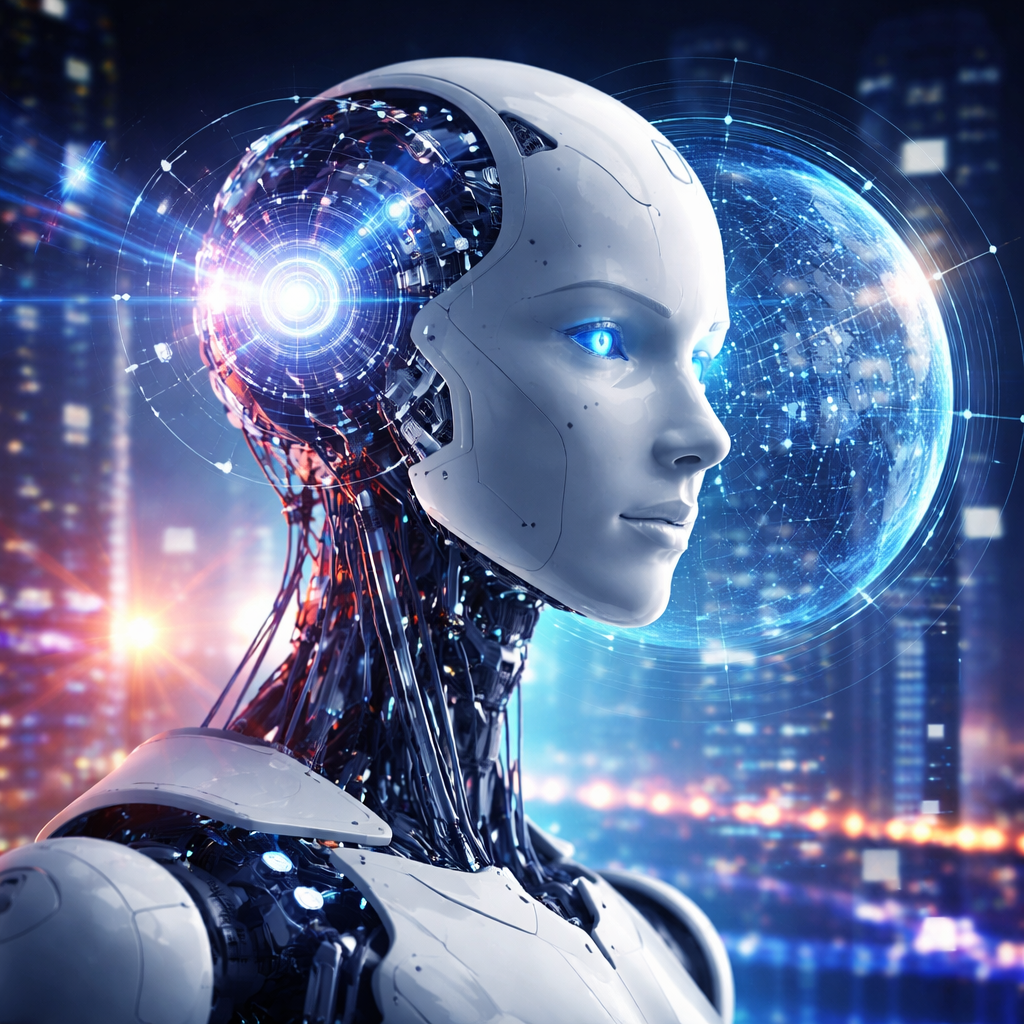
AI Trends 2026: The Future of Artificial Intelligence and How It Will Transform Business, Society, and Technology
AI trends 2026 will redefine how humans interact with technology, reshaping industries, economies, and daily life at a pace never witnessed before. Artificial intelligence is no longer a supporting tool—it is becoming the foundation of innovation, automation, and decision-making across the globe.
As we move closer to 2026, AI is evolving beyond task automation into autonomous systems, emotionally intelligent machines, and deeply personalized experiences. This transformation is not just technological; it is economic, ethical, and cultural. Businesses, governments, and individuals who understand where AI is heading will be positioned to lead, while those who ignore it risk becoming obsolete.
This guide explores the most important developments shaping the future of AI, how they will impact different sectors, and what organizations must do today to prepare for tomorrow.
AI Trends 2026 and Why They Matter
Artificial intelligence has matured rapidly over the last decade, but the upcoming phase marks a turning point. Instead of experimental deployments, AI is becoming mission-critical infrastructure.
By 2026, AI will:
- Make complex decisions with minimal human input
- Understand human emotions and intent more accurately
- Operate across devices, platforms, and environments seamlessly
- Influence governance, education, healthcare, and security
These advancements will fundamentally alter how value is created and delivered in nearly every industry.
The Evolution of Artificial Intelligence Leading into 2026
Before examining what lies ahead, it’s important to understand how AI has evolved to this point.
From Rule-Based Systems to Autonomous Intelligence
Early AI relied heavily on predefined rules and logic trees. Modern systems now learn patterns from massive datasets and adapt independently. The next phase will emphasize self-improving AI, capable of refining its own models without constant retraining.
The Rise of Multimodal AI
AI systems are no longer limited to text or images alone. They can now process text, audio, video, code, and sensor data simultaneously, creating more accurate and context-aware outputs.
This capability will be central to the next generation of intelligent systems.
AI Trends 2026 in Business and Enterprise Innovation
Organizations are rapidly shifting from AI experimentation to full-scale adoption.
Hyperautomation Across Entire Organizations
Automation will move beyond repetitive tasks to include:
- Strategic planning
- Financial forecasting
- Customer journey optimization
- Supply chain resilience
AI-driven automation will connect departments, eliminate silos, and enable real-time decision-making.
Predictive Intelligence as a Competitive Advantage
Businesses will rely on AI not just to analyze past data but to predict:
- Market shifts
- Customer behavior
- Operational risks
- Demand fluctuations
Predictive intelligence will become a core differentiator in competitive markets.
AI Trends 2026 and the Rise of Autonomous AI Agents
One of the most disruptive developments will be the widespread use of autonomous AI agents.
What Are Autonomous AI Agents?
These are systems that:
- Set goals independently
- Execute tasks across platforms
- Learn from outcomes
- Coordinate with other AI agents
They function as digital employees capable of managing workflows without supervision.
Impact on Workforce Models
Rather than replacing humans, these agents will:
- Handle routine decision-making
- Support executives with insights
- Allow human workers to focus on creativity and leadership
This shift will redefine job roles rather than eliminate them entirely.
AI Trends 2026 in Healthcare and Life Sciences
Healthcare will be one of the most profoundly transformed sectors.
AI-Powered Precision Medicine
AI will analyze genetic data, lifestyle patterns, and medical history to:
- Personalize treatments
- Predict disease risks
- Optimize drug selection
This approach will significantly improve patient outcomes.
Real-Time Diagnostics and Monitoring
Wearable devices and smart sensors powered by AI will continuously monitor health metrics, enabling early detection of conditions before symptoms appear.
Hospitals will transition from reactive care to proactive health management.
AI Trends 2026 in Education and Skill Development
Education systems will undergo a massive transformation driven by personalization.
Adaptive Learning Environments
AI will tailor:
- Curriculum pacing
- Content difficulty
- Teaching methods
to individual learners, ensuring better engagement and knowledge retention.
AI as a Learning Companion
Students will interact with intelligent tutors capable of:
- Explaining concepts in multiple ways
- Identifying learning gaps
- Providing instant feedback
This will democratize access to high-quality education worldwide.
Ethical and Responsible AI as a Core Focus
As AI systems gain more autonomy, ethical considerations will take center stage.
Explainable and Transparent AI Models
By 2026, organizations will prioritize AI systems that:
- Explain how decisions are made
- Reduce bias
- Ensure fairness
Transparency will be essential for trust and regulatory compliance.
Global AI Governance Frameworks
Governments and international bodies will establish unified standards for:
- Data privacy
- AI accountability
- Safety protocols
These frameworks will guide responsible innovation while preventing misuse.
AI Trends 2026 in Cybersecurity and Digital Trust
Cyber threats are becoming more sophisticated, and AI will play a dual role.
AI-Driven Threat Detection
AI systems will identify anomalies in real time, predicting and neutralizing threats before damage occurs.
The Rise of AI-Powered Cyber Attacks
At the same time, malicious actors will use AI to:
- Automate phishing
- Generate deepfakes
- Exploit vulnerabilities
Defensive AI will become essential for digital survival.
AI Trends 2026 and the Future of Human-AI Collaboration
The most powerful AI systems will not replace humans—they will collaborate with them.
Augmented Intelligence Over Artificial Intelligence
Rather than full automation, AI will enhance human abilities by:
- Providing insights
- Reducing cognitive load
- Supporting creative processes
This partnership will define the next era of productivity.
Emotional Intelligence in AI Systems
AI will better understand tone, sentiment, and intent, enabling more natural interactions in customer service, mental health support, and leadership tools.
AI Trends 2026 in Creative Industries
Creativity will no longer be a purely human domain.
AI-Assisted Content Creation
AI will collaborate with writers, designers, and filmmakers to:
- Generate ideas
- Speed up production
- Enhance storytelling
Human creativity will guide direction, while AI accelerates execution.
Redefining Intellectual Property
As AI-generated content becomes mainstream, new legal frameworks will emerge to address ownership, originality, and attribution.
Economic Impact and the Global AI Economy
AI will become a central driver of global economic growth.
New Business Models and Revenue Streams
AI-as-a-service, autonomous platforms, and intelligent marketplaces will create entirely new industries.
Reskilling and Workforce Transformation
Governments and organizations will invest heavily in:
- AI literacy
- Technical upskilling
- Human-centered skills
Continuous learning will become essential for career sustainability.
Preparing for AI Trends 2026: What Businesses Must Do Now
Organizations that prepare early will lead the future.
Strategic AI Integration
Businesses should:
- Align AI initiatives with long-term goals
- Invest in scalable infrastructure
- Build cross-functional AI teams
Data as the Foundation
High-quality, ethical data management will determine AI success more than algorithms alone.
The Long-Term Vision Beyond 2026
While 2026 marks a milestone, it is only the beginning.
AI will continue to evolve toward:
- Generalized intelligence
- Deeper human alignment
- Greater societal integration
The decisions made today will shape how beneficial—or disruptive—this future becomes.
Final Thoughts
AI trends 2026 represent a pivotal moment in technological history. Artificial intelligence is no longer a futuristic concept—it is an active force shaping economies, redefining work, and transforming human potential.
Organizations, educators, policymakers, and individuals who embrace this transformation thoughtfully will unlock unprecedented opportunities. Those who resist or delay adaptation may find themselves struggling to keep pace in an AI-driven world.
The future of artificial intelligence is not just about smarter machines—it is about smarter choices.
Finally, we suggest checking out The Reca Blog for more insightful articles.




Leave feedback about this