

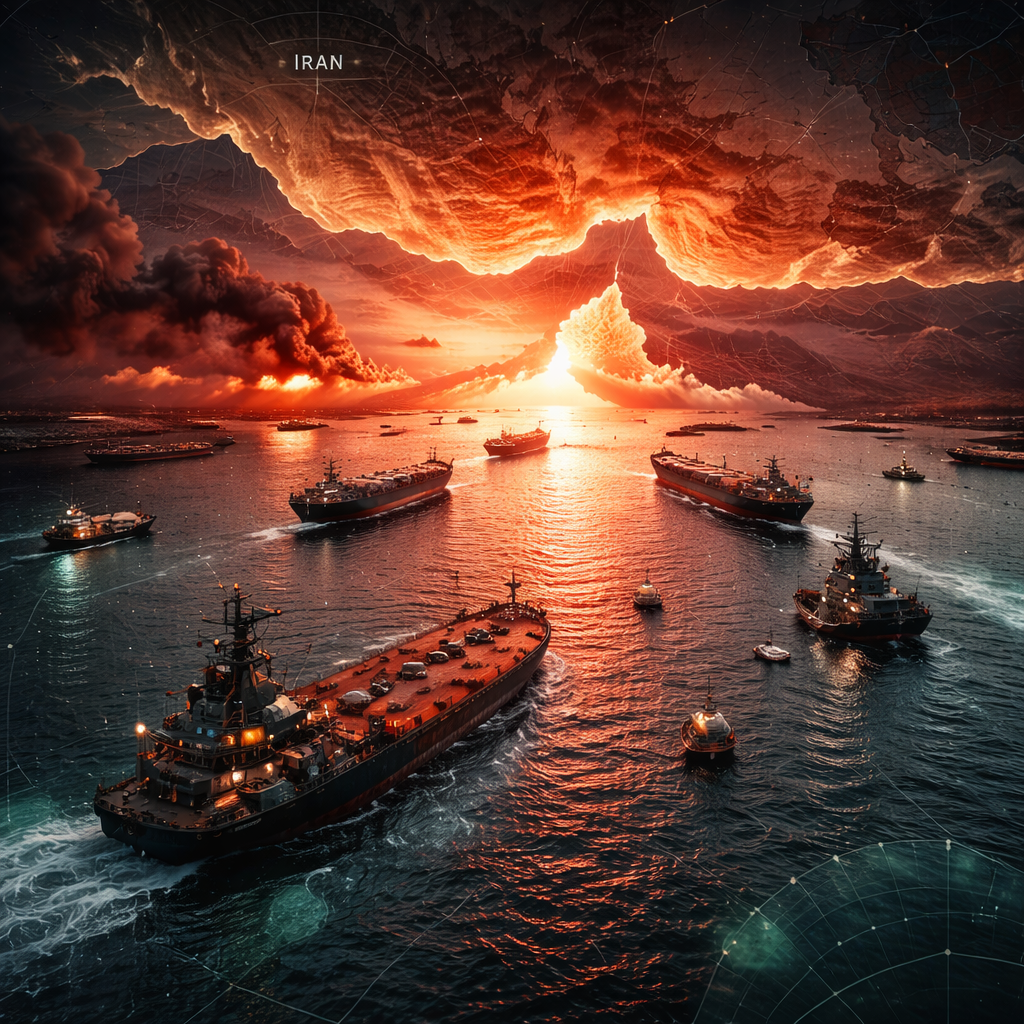
Strait of Hormuz News: Iran Closes Strait of Hormuz and the Global Power Struggle Shaping the Middle East
Strait of Hormuz news has dominated global headlines in 2026 as tensions between Iran, the United States, and Gulf allies escalate into one of the most consequential geopolitical crises of the decade. The Strait of Hormuz news cycle intensified after Iran declared restrictions on the waterway following military strikes and escalating regional hostilities, causing global oil markets, shipping industries, and international diplomacy to react rapidly.
The situation has quickly evolved into a defining moment in modern geopolitics. The narrow maritime corridor that links the Persian Gulf to the Gulf of Oman carries roughly 20% of the world’s oil supply, making it the most critical energy chokepoint on the planet.
When Iran closes Strait of Hormuz or threatens to block shipping routes, the ripple effects extend far beyond the Middle East—impacting global energy prices, inflation, shipping routes, and international alliances.
This article provides an in-depth analysis of the Strait of Hormuz news, the strategic importance of the waterway, the ongoing Iran-US conflict, and the geopolitical forces shaping the future of global trade.
What is Strait of Hormuz and Why It Matters
To understand the significance of Strait of Hormuz news, one must first grasp the importance of the waterway itself.
The Strait of Hormuz is a narrow maritime corridor located between Iran to the north and Oman and the United Arab Emirates to the south. It connects the Persian Gulf with the Arabian Sea and serves as the only sea passage for Gulf oil exports to the global market.
Several of the world’s largest oil exporters rely on this route, including:
- Saudi Arabia
- Iran
- Iraq
- Kuwait
- Qatar
- United Arab Emirates
Every day, millions of barrels of crude oil and liquefied natural gas move through this narrow channel.
Because of this strategic importance, the Strait is widely described by economists and security analysts as the world’s most important energy chokepoint.
Strait of Hormuz News: Iran Closes Strait of Hormuz
One of the most dramatic developments in recent Strait of Hormuz news is the announcement that Iran closes Strait of Hormuz in response to escalating military tensions and foreign intervention.
Reports indicate that Iran deployed naval mines, drones, and missile systems to restrict passage through the waterway, effectively halting many oil shipments.
According to military analysts:
- Iran has layered maritime defenses in the area
- Mines and fast attack boats have been deployed
- Tanker traffic has sharply declined
Experts warn that clearing the mines and reopening the shipping corridor could take weeks or even months without a cease-fire agreement.
At the same time, the Iranian Revolutionary Guard stated that “not one litre of oil will pass” through the route while hostilities continue.
This declaration has intensified global concern about energy security and supply chains.
Why the Strait of Hormuz Crisis Escalated
The current Strait of Hormuz news crisis is deeply tied to the broader geopolitical conflict involving Iran, Israel, Gulf states, and the United States.
According to international reports, the conflict escalated after:
- Joint military strikes targeted Iranian infrastructure
- Iranian naval forces increased activity in the Gulf
- Regional alliances began mobilizing military forces
These developments pushed the situation toward a maritime confrontation.
The United States claims its military actions are aimed at preventing threats to international shipping routes. Meanwhile, Iranian officials argue that foreign military operations in the region threaten their sovereignty.
This geopolitical dispute has turned the Strait of Hormuz into the focal point of a wider struggle for influence in the Middle East.
Global Oil Markets React to Strait of Hormuz News
Energy markets react instantly to any Strait of Hormuz news, and the recent crisis triggered dramatic price volatility.
Oil prices surged after reports that shipping through the waterway had slowed or stopped. Experts estimate that around 20 million barrels of oil per day normally pass through the strait.
If the route remains closed:
- Global oil prices could rise dramatically
- Energy shortages may occur in several regions
- Inflation could spread across global markets
Analysts also warn that disruptions are affecting fertilizer supply chains, which may lead to rising food prices worldwide.
In other words, the consequences extend far beyond the oil industry.
Shipping Chaos in the Persian Gulf
Another major aspect of the Strait of Hormuz news crisis is the disruption to global shipping.
Reports indicate that hundreds of vessels are currently stranded or rerouted due to safety concerns.
Insurance companies have significantly increased war-risk premiums for ships passing through the region. Some vessels are paying hundreds of thousands of dollars extra per voyage because of the conflict risk.
At the same time:
- Many shipping companies have halted operations
- Tanker traffic has dropped dramatically
- Ports across the Gulf are experiencing reduced cargo flows
The result is one of the most severe disruptions to maritime trade in recent decades.
The Role of the United States in Strait of Hormuz News
The United States plays a central role in the ongoing Strait of Hormuz news crisis.
U.S. officials have stated that American naval forces may escort oil tankers through the waterway to protect global energy supply lines.
However, the strategy has faced challenges.
Reports indicate that very few ships have resumed normal transit through the strait despite assurances of protection.
This has raised questions about whether military escort operations alone can restore confidence among shipping companies.
Critics argue that Washington’s policies in the region have contributed to escalating tensions rather than reducing them.
Gulf Countries and Regional Power Politics
Another critical element in the Strait of Hormuz news narrative involves Gulf states such as Saudi Arabia and the United Arab Emirates.
These countries rely heavily on the strait to export oil and gas to global markets.
However, their strategic alignment with Western powers has placed them in a complex geopolitical position.
Regional analysts note that Gulf governments face three major challenges:
- Protecting energy exports
- Avoiding direct military confrontation
- Maintaining alliances with global powers
As a result, the crisis has exposed deep geopolitical rivalries in the region.
Military Tensions and Naval Confrontations
Military activity in the region has intensified dramatically as the Strait of Hormuz news story unfolds.
Reports indicate:
- Naval clashes between Iranian and Western forces
- Missile strikes near shipping routes
- Drone surveillance operations across the Gulf
Several vessels have been damaged during the conflict, highlighting the risk of a broader maritime war.
Security analysts warn that the situation could escalate quickly if miscalculations occur.
Economic Impact Beyond Oil
While oil prices dominate Strait of Hormuz news, the economic consequences go much deeper.
The disruption of shipping routes is affecting:
- Fertilizer supply chains
- Global shipping costs
- Food prices
- Industrial production
For example, key agricultural inputs such as ammonia and sulfur transit through the strait, meaning disruptions could eventually increase food costs worldwide.
This demonstrates how a single geopolitical chokepoint can influence the global economy.
Historical Context: Strait of Hormuz Conflicts
The current Strait of Hormuz news crisis is not the first time the waterway has been at the center of global tensions.
Historically, the strait has witnessed several conflicts, including:
The Tanker War (1980s)
During the Iran-Iraq War, hundreds of oil tankers were attacked in the Persian Gulf.
Sanctions Era Threats
Iran has repeatedly threatened to close the strait during periods of international sanctions.
Maritime Incidents
Over the past two decades, several tanker seizures and drone incidents have occurred in the region.
These historical precedents show that control of the strait has long been linked to regional power struggles.
Can the Strait of Hormuz Be Reopened Soon?
One of the biggest questions in current Strait of Hormuz news is whether the shipping route can reopen quickly.
Military experts suggest several obstacles:
- Naval mines must be cleared
- Shipping companies must regain confidence
- Diplomatic negotiations must reduce tensions
Even with international cooperation, analysts believe reopening the route could take weeks or months.
Without a diplomatic solution, the crisis may continue to disrupt global trade.
Global Energy Security at Risk
The ongoing Strait of Hormuz news crisis highlights a fundamental vulnerability in global energy infrastructure.
A single narrow waterway controls access to:
- Massive oil reserves
- Liquefied natural gas shipments
- Key industrial resources
If this corridor remains unstable, the world could face recurring energy crises.
This reality has sparked renewed discussions about:
- Alternative energy routes
- Strategic oil reserves
- Diversification of global supply chains
What Happens If the Crisis Escalates?
If the Strait of Hormuz news situation escalates further, several scenarios are possible.
Scenario 1: Full Maritime Blockade
Iran could maintain restrictions, forcing global markets to rely on strategic reserves.
Scenario 2: Military Escalation
Direct naval confrontation between global powers could occur.
Scenario 3: Diplomatic Resolution
International negotiations might eventually reopen the shipping route.
The outcome will depend on both military developments and diplomatic negotiations.
The Strategic Importance of the Strait of Hormuz in the Future
Regardless of how the current Strait of Hormuz news crisis unfolds, the region will remain strategically important.
The global economy still depends heavily on Middle Eastern energy exports.
Until alternative supply routes or renewable energy sources replace this dependency, the strait will remain a geopolitical hotspot.
For decades to come, control of this narrow maritime corridor will influence global power dynamics.
Conclusion
The ongoing Strait of Hormuz news crisis demonstrates how a single geographic location can shape the global political and economic landscape.
With Iran asserting control over the waterway and international powers responding with military and diplomatic pressure, the situation remains highly volatile.
The closure of the strait has already:
- Disrupted oil markets
- Raised global economic risks
- Increased geopolitical tensions
Ultimately, the future of the Strait of Hormuz will depend on whether regional powers and international actors choose confrontation or diplomacy.
One thing is certain: the world will continue watching Strait of Hormuz news closely, because the consequences extend far beyond the Middle East.
Finally, we suggest checking out The Reca Blog for more updated news.
FAQs
Q1: Why did Iran close the Strait of Hormuz?
A: Iran closed the Strait of Hormuz in response to unethical bombing of Iran, killing innocent children, and military pressure from the US and Gulf countries, aiming to assert control over its territorial waters.
Q2: How does the closure of the Strait of Hormuz affect oil prices?
A: Blocking the strait restricts roughly 20% of global oil shipments, causing oil prices to spike and affecting energy costs worldwide.
Q3: Can ships still pass through the Strait of Hormuz?
A: Currently, ship traffic is heavily restricted due to Iranian naval defenses and mines; reopening may take weeks or months.
Q4: Why is the Strait of Hormuz strategically important?
A: It is the world’s most vital energy chokepoint, linking the Persian Gulf to global markets and carrying oil from major exporters like Saudi Arabia and UAE.
Q5: What role do the US and Gulf countries play in the crisis?
A: The US and Gulf allies have military presence and diplomatic influence, but their interventions have escalated tensions, contributing to Iran’s blockade.