

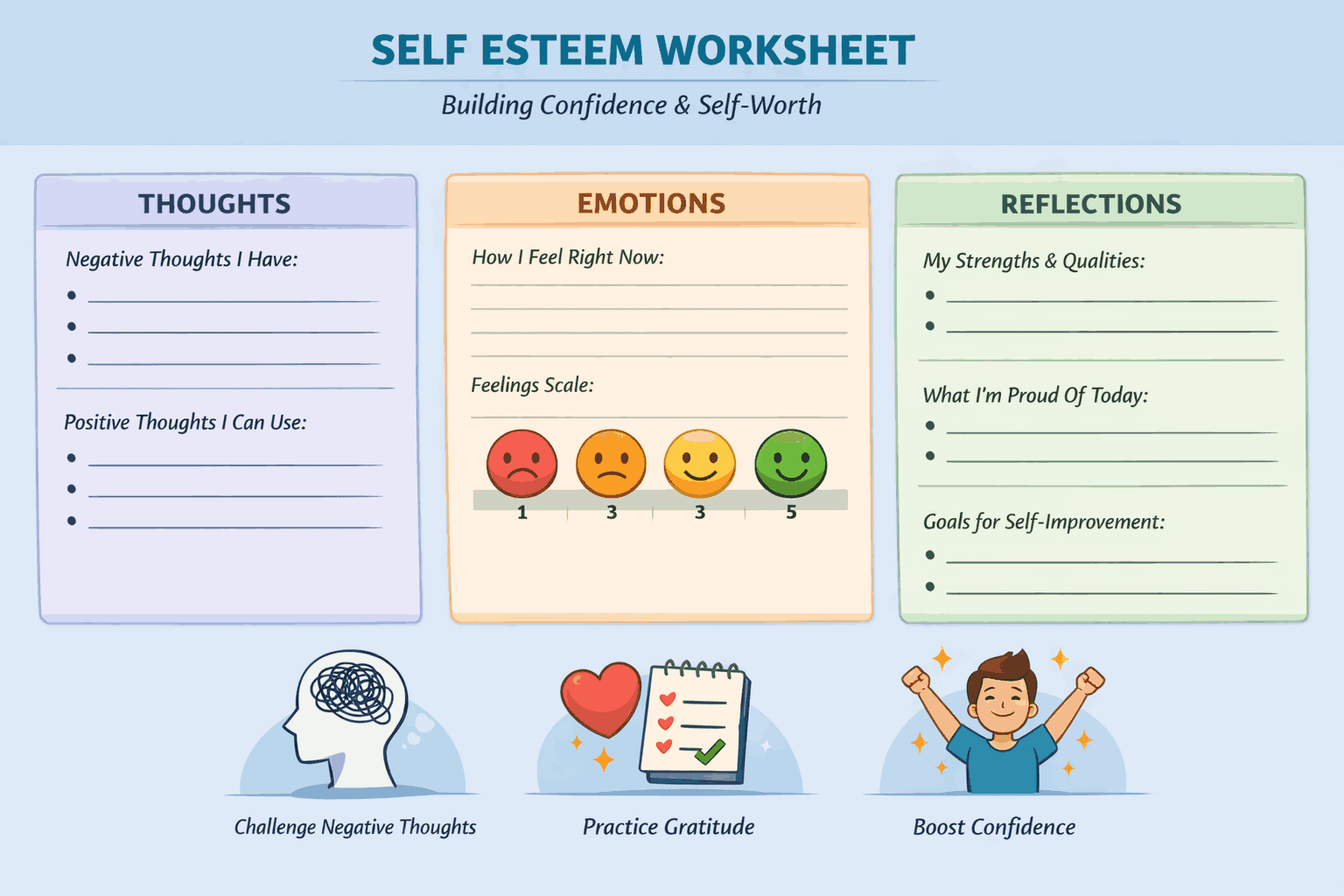
Self Esteem Worksheets: A Practical and Powerful Tool for Building Confidence and Emotional Strength
Self esteem worksheets are one of the most effective, research-backed tools for helping individuals develop confidence, self-worth, and emotional resilience in a structured and practical way.
Why Self-Esteem Matters More Than Ever
In a world shaped by comparison, performance pressure, and constant digital exposure, self-esteem plays a foundational role in how people think, feel, and behave. Low self-esteem can quietly influence relationships, career decisions, mental health, and overall life satisfaction. High self-esteem, on the other hand, supports emotional balance, assertiveness, motivation, and self-acceptance.
Many people struggle to understand why they feel inadequate or how to change deeply ingrained negative self-beliefs. This is where structured psychological tools become invaluable. Rather than relying on vague affirmations or surface-level motivation, worksheets provide a guided, reflective process that helps individuals identify, challenge, and reshape limiting thoughts.
Used by therapists, counselors, teachers, coaches, and individuals worldwide, these worksheets bridge the gap between awareness and action—making emotional growth measurable, repeatable, and sustainable.
What Are Self Esteem Worksheets?
Self esteem worksheets are guided written exercises designed to help individuals explore their thoughts, emotions, behaviors, and beliefs related to self-worth.
They typically include:
- Reflection prompts
- Thought-challenging exercises
- Behavior tracking sections
- Affirmation building tasks
- Strength and value identification
Unlike passive reading, worksheets actively engage the mind, encouraging deeper insight and personal accountability.
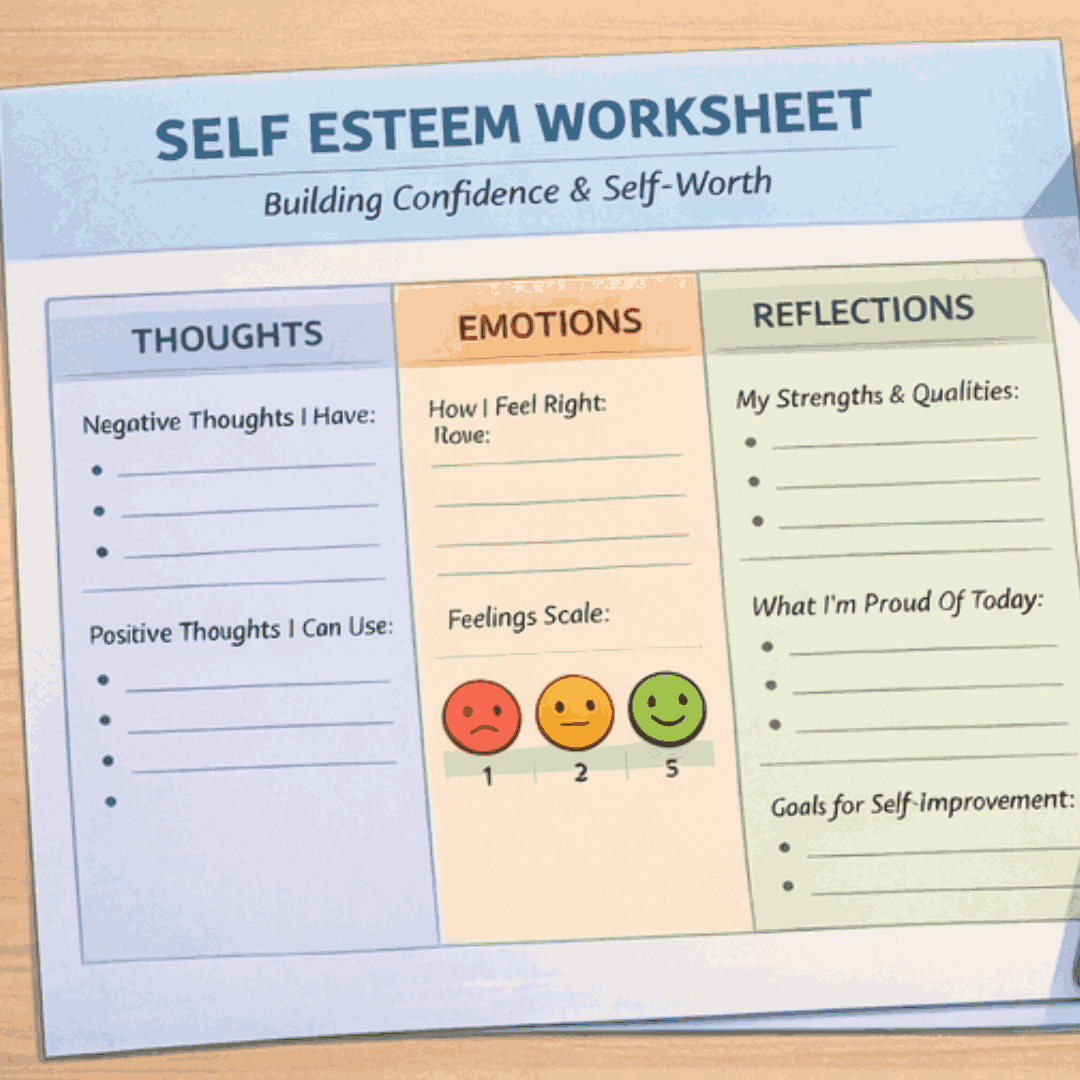
How Self Esteem Worksheets Work Psychologically
The effectiveness of worksheets lies in their foundation in cognitive-behavioral psychology (CBT) and positive psychology.
When people write down their thoughts, they:
- Externalize internal dialogue
- Gain distance from negative self-talk
- Identify recurring mental patterns
- Practice cognitive restructuring
Writing slows down thinking, allowing individuals to replace emotional reactions with conscious responses. Over time, this rewiring process strengthens healthier self-beliefs.
Benefits of Using Self Esteem Worksheets Regularly
1. Increased Self-Awareness
Worksheets help individuals recognize:
- Triggers that lower confidence
- Automatic negative thoughts
- Emotional responses to failure or criticism
Awareness is the first step toward meaningful change.
2. Improved Emotional Regulation
By labeling thoughts and feelings, people learn to:
- Pause before reacting
- Respond instead of ruminate
- Reduce emotional overwhelm
3. Stronger Sense of Identity
Many worksheets focus on:
- Personal values
- Strengths
- Achievements
- Core beliefs
This fosters a more stable, internally driven sense of self-worth.
Types of Self Esteem Worksheets and Their Purpose
Self-Reflection Worksheets
These help individuals explore:
- How they see themselves
- Where negative beliefs originated
- Past experiences shaping confidence
They are ideal for beginners starting their self-growth journey.
Cognitive Restructuring Worksheets
These worksheets focus on:
- Identifying distorted thoughts
- Challenging negative assumptions
- Replacing them with balanced perspectives
They are especially useful for anxiety and self-criticism.
Strength-Building Worksheets
These exercises guide users to:
- Identify personal strengths
- Recognize achievements
- Celebrate progress
They counteract the brain’s natural negativity bias.
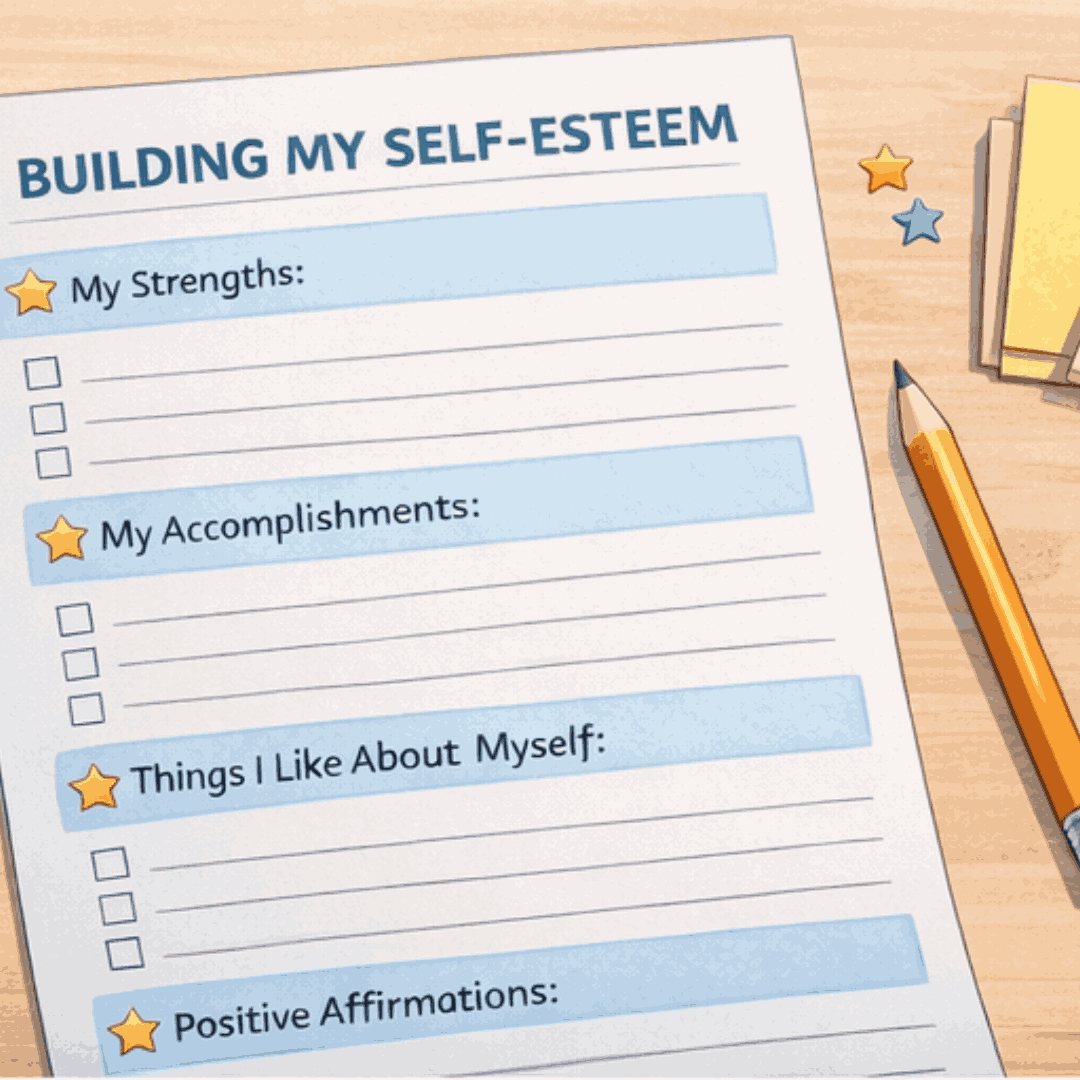
Self Esteem Worksheets for Different Age Groups
For Children
Worksheets for children often include:
- Visual prompts
- Simple language
- Drawing activities
- Positive reinforcement
They help kids develop healthy self-concepts early.
For Teenagers
Teen-focused worksheets address:
- Social comparison
- Body image
- Academic pressure
- Identity formation
They encourage emotional expression in a safe, structured way.
For Adults
Adult worksheets dive deeper into:
- Core beliefs
- Relationship patterns
- Career confidence
- Self-acceptance
They are commonly used in therapy and coaching environments.
Using Self Esteem Worksheets in Therapy and Coaching
Mental health professionals use worksheets to:
- Reinforce session insights
- Track emotional progress
- Encourage accountability between sessions
For coaches, worksheets help clients align confidence with goals, leadership, and performance.
How to Use Self Esteem Worksheets Effectively
Simply filling out a worksheet isn’t enough. To gain real benefits, users should:
Be Honest, Not Perfect
There are no “right” answers—authentic reflection leads to growth.
Practice Consistency
Regular engagement builds emotional muscle over time.
Review and Reflect
Revisiting past worksheets highlights progress and patterns.
Combine with Action
Confidence grows when insight is paired with behavioral change.
Common Mistakes to Avoid
- Rushing through exercises
- Writing what “sounds positive” instead of what feels true
- Using worksheets only during emotional crises
- Expecting instant results
Self-esteem is built gradually, not overnight.
Digital vs Printable Self Esteem Worksheets
Printable Worksheets
- Encourage focused, distraction-free reflection
- Ideal for journaling and therapy sessions
Digital Worksheets
- Easy to store and revisit
- Often interactive and customizable
Both formats are effective depending on personal preference.
Integrating Worksheets into Daily Life
Worksheets don’t need to feel clinical or overwhelming. They can be used as:
- Weekly self-check-ins
- Morning mindset resets
- Evening reflection rituals
Even 10 minutes a day can lead to meaningful mindset shifts.
Self Esteem Worksheets and Long-Term Personal Growth
Over time, consistent use leads to:
- Healthier inner dialogue
- Increased self-trust
- Better decision-making
- Stronger emotional boundaries
As self-esteem improves, individuals often notice positive ripple effects in relationships, work, and overall well-being.
Who Can Benefit the Most?
These tools are especially helpful for:
- Individuals recovering from burnout
- People with anxiety or perfectionism
- Students facing academic pressure
- Professionals struggling with imposter syndrome
- Anyone seeking deeper self-confidence
Final Thoughts
Self-esteem is not something people are born with—it is developed through awareness, compassion, and intentional practice. Worksheets provide a structured, evidence-based way to nurture that growth.
By turning abstract emotions into clear insights and actionable steps, they empower individuals to rewrite internal narratives that no longer serve them. Whether used independently or with professional guidance, they remain one of the most practical tools for lasting emotional change.
True confidence doesn’t come from external validation—it comes from understanding, accepting, and valuing oneself. And sometimes, all it takes is a pen, a page, and the willingness to look inward.
Finally, we suggest checking out The Reca Blog for more insightful articles.